
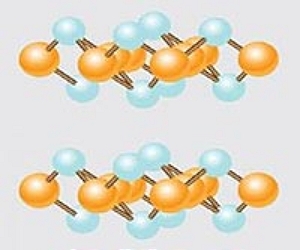
Japanese scientists say they've experimentally determined the mechanism underlying electron pair formation in iron-based, high-temperature superconductors.
The landmark finding by Riken Institute researchers involves the classical theory that superconductivity occurs when two electrons are bound together to form a pair, known as a Cooper pair, by lattice vibrations. That pairing mechanism has never been confirmed for high-temperature superconductors.
"The iron-based superconductors investigated by the research team offer the greatest chance of solving this enigma," Riken said in a statement, noting the discovery breaks new ground by supporting a mechanism for electron pairing based not on lattice vibrations, as in other forms of superconductivity, but on magnetism.
"In providing a powerful constraint on theoretical models, the finding thus marks a major advance toward unraveling the mystery of high-temperature superconductivity," the company said.
The research is reported in the journal Science.
Share This Article With Planet Earth
