
Astronauts who spend months on the International Space Station can return to Earth up to three percent taller than they were at launch. At the upper end, a six-foot crew member could gain roughly two inches in orbit. The change is measurable, but it is temporary: after astronauts return to Earth, their height normally settles back toward its pre-flight measurement within a few months.
The familiar explanation is that the discs between the vertebrae swell once gravity stops compressing them. That may be part of the story, and computer models predict that it can happen, but the evidence from astronauts is more complicated. The spine also straightens, supporting muscles lose conditioning and the body adopts postures it rarely maintains on Earth.
In other words, the height gain is real. The precise share contributed by discs, spinal curvature, muscles and other tissues is still being worked out.
What happens during the first days in orbit
The change begins early in a mission. Without the constant axial load produced by standing and walking, the torso lengthens and the natural curves of the spine become less pronounced. Astronauts may notice that clothing fits differently and that equipment adjusted precisely on Earth suddenly feels slightly too small.
The rest of the body is changing at the same time. Fluid shifts from the legs toward the head, producing the rounded or puffy appearance familiar from space-station video calls. The feet stop bearing weight, calluses soften and the body settles into a loose posture with the knees bent and the arms floating in front of the chest.
Canadian astronaut Chris Hadfield spent five months aboard the station and became its first Canadian commander in 2013. That duration is typical of the long missions in which these musculoskeletal changes become especially important.
The three percent figure is an upper limit
Three percent is the number most often repeated, but it should not be read as the result every astronaut experiences. Individual changes depend on height, anatomy, posture, mission duration and when the measurement is taken. For some crew members, the difference may be several centimetres; for others, it is smaller.
The increase also does not mean every structure in the spine lengthens by three percent. It describes the change in overall stature. Researchers must then determine how much came from reduced spinal curvature, altered posture, changes in muscles and connective tissue, or expansion within the intervertebral discs.
What the MRI evidence found
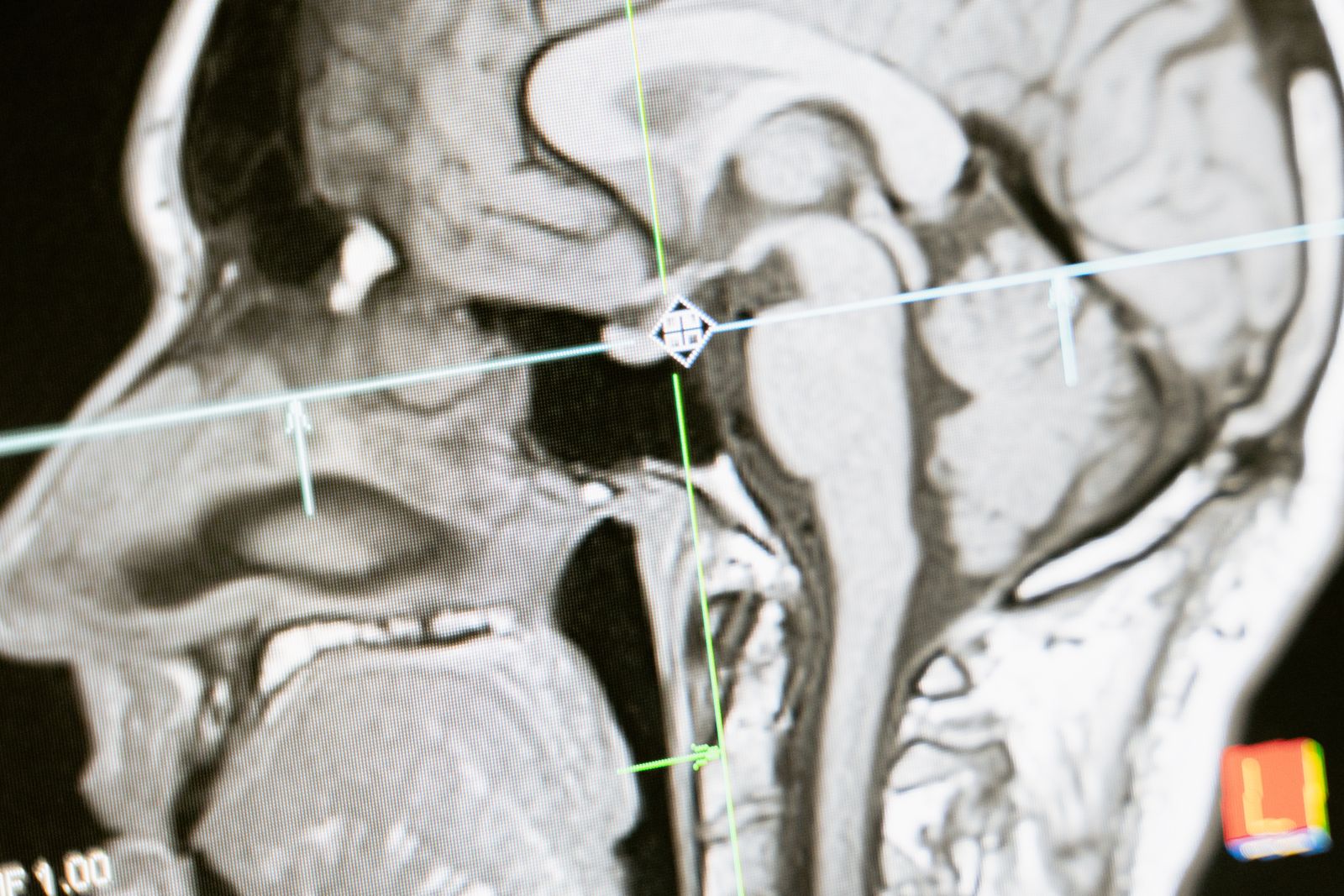
One of the clearest checks came from a small prospective study involving six NASA crewmembers who completed approximately six-month ISS missions. Researchers used MRI scans before flight, shortly after landing and again during recovery to examine the lumbar muscles and the height of the intervertebral discs.
The post-flight MRI study found substantial changes in the paraspinal muscles but no appreciable or consistent increase in lumbar disc height. Lean muscle made up a smaller proportion of the paraspinal muscle area immediately after the mission, and its recovery remained incomplete several weeks later.
That finding matters because it runs against the simplest version of the swollen-disc explanation. It does not prove that discs never take on additional water in orbit. It shows that researchers did not observe the expected increase consistently in these astronauts after landing, and that spinal elongation may involve factors other than disc swelling.
What computer modelling predicts
A separate 2023 numerical study modelled lumbar loading, disc water and muscle forces under microgravity. In its neutral microgravity posture, the model predicted that disc water content would rise by roughly seven to ten percent and disc height by about two to three percent. It also predicted large reductions in the compressive forces acting on the discs and in the forces generated by several lumbar muscle groups.
Those figures are predictions from a musculoskeletal model, not measurements taken from astronauts’ discs while they floated aboard the ISS. The researchers noted that the model had been well validated under Earth gravity but only partially validated for microgravity because experimental data remain limited.
The model also produced a result that complicates the usual picture. When the simulated body moved into a curled, fetal-like posture, several of the predicted changes reversed direction. Posture may therefore be as important as the absence of normal loading when researchers estimate what happens to the spine.
Why the extra height disappears
Once an astronaut is standing under Earth gravity again, the body begins readapting. The spine returns toward its familiar curves, weight once more passes through the vertebral column and muscles that had been lightly used in orbit must resume stabilising the torso.
The process is gradual rather than instantaneous. Measurements taken soon after landing may still show much of the added height, while later measurements show it fading. After a few months, astronauts generally return to approximately their pre-flight stature.
That return does not mean every tissue has recovered on the same schedule. Height can normalise while muscle quality, strength, coordination and tolerance for ordinary loading are still catching up.
Back pain is common, but usually mild
The transition into microgravity can be uncomfortable. A review discussed by Johns Hopkins researchers found that 52 percent of space travellers reported back pain during their first two to five days in space. Of those cases, 86 percent were classified as mild.
Disc injuries after spaceflight are a more serious concern. The same review reported that astronauts were more than four times as likely to experience a herniated disc as comparison populations, with the risk particularly elevated during the first year after returning.
The mechanism is not settled. Muscle atrophy, reduced spinal curvature, altered movement patterns, reloading after landing and individual anatomy may all contribute. It is therefore too simple to say that temporarily enlarged discs alone create the risk.
The muscles may be the more important clue
The muscles alongside the spine do more than produce movement. They continually make small adjustments that stabilise the vertebral column while a person stands, walks, lifts or reaches. In microgravity, much of that everyday work disappears.
In the six-crewmember MRI study, the proportion of lean tissue in the lumbar paraspinal muscles fell noticeably after the mission. About six weeks later, much of the loss had been recovered, but the measurements had not completely returned to their pre-flight values.
This creates a difficult moment after landing. The astronaut has returned to an environment in which the spine must resist gravity, but the muscles responsible for controlling it have spent months working under very different demands. Rehabilitation is therefore about more than waiting for the astronaut’s height to return to normal.
Measuring a spine that changes in orbit
Researchers use several tools to separate these overlapping effects. Standing and seated height measurements show how much the torso has lengthened. MRI can reveal changes in muscle composition, spinal curvature and disc dimensions before and after a mission. Ultrasound offers a way to examine parts of the spine while the astronaut is still in microgravity.
Each approach has limitations. A scan performed after landing captures a body that has already started readapting to Earth gravity. Small astronaut samples make it difficult to distinguish universal patterns from individual differences, while equipment and crew-time limits make repeated in-flight imaging challenging.
That is why the broad observation, astronauts become taller, is more certain than the exact mechanical explanation for every millimetre of growth.
The height change is part of a larger reset
The spine is only one of the systems responding to microgravity. Fluid moves toward the head. The heart no longer has to pump against the same gravitational gradient. Changes have also been documented in vision, balance, brain position and the way astronauts judge movement and force.
A study involving 11 astronauts who spent at least five months on the ISS found that they continued to move objects more slowly and grip them more firmly than necessary in weightlessness. Their nervous systems appeared to retain movement patterns developed through decades of handling objects under Earth gravity.
The astronauts’ grip and movement rhythm recovered quickly after their return, with the study reporting substantial readaptation within about a day. The musculoskeletal system follows a slower timetable, particularly when muscle tissue must be rebuilt.
What the findings could mean for Mars
A journey to Mars would expose a crew to several distinct loading environments. Astronauts would experience microgravity during transit, approximately 38 percent of Earth gravity on the Martian surface and microgravity again on the return journey.
Nobody has directly measured how the human spine adapts to months under Martian gravity. It may be enough to provide some loading while still being too weak to preserve Earth-conditioned muscles and movement patterns. Disc behaviour could also differ from both orbital microgravity and full Earth gravity.
The grip study raises another question. When astronauts feel gravity on Mars, their brains may initially apply movement strategies learned on Earth even though objects would weigh far less. A tool would retain the same mass and inertia, but its weight would be only about 38 percent of what the astronaut expects at home.
For the spine, the greatest risks may arise during transitions: landing on Mars after months of unloading, working in partial gravity and later enduring acceleration during departure and Earth re-entry. These possibilities remain mission-planning concerns rather than measured outcomes from an actual Mars crew.
Exercise helps, but it cannot reproduce a planet
ISS crew members normally devote about two hours each day to exercise and related preparation. They use a treadmill with a harness, a stationary cycle and the Advanced Resistive Exercise Device, which allows movements resembling squats, deadlifts and other resistance exercises.
These countermeasures have substantially improved the preservation of bone and muscle compared with earlier eras of long-duration flight. They nevertheless provide intermittent loading rather than the continuous gravitational environment experienced on Earth. The body still spends most of each day floating.
Researchers have also studied compression garments, specialised suits and short-radius centrifuges that could expose the body to artificial gravity. None has yet recreated ordinary Earth loading as a routine, full-scale solution aboard the ISS.
The measurement taken after landing
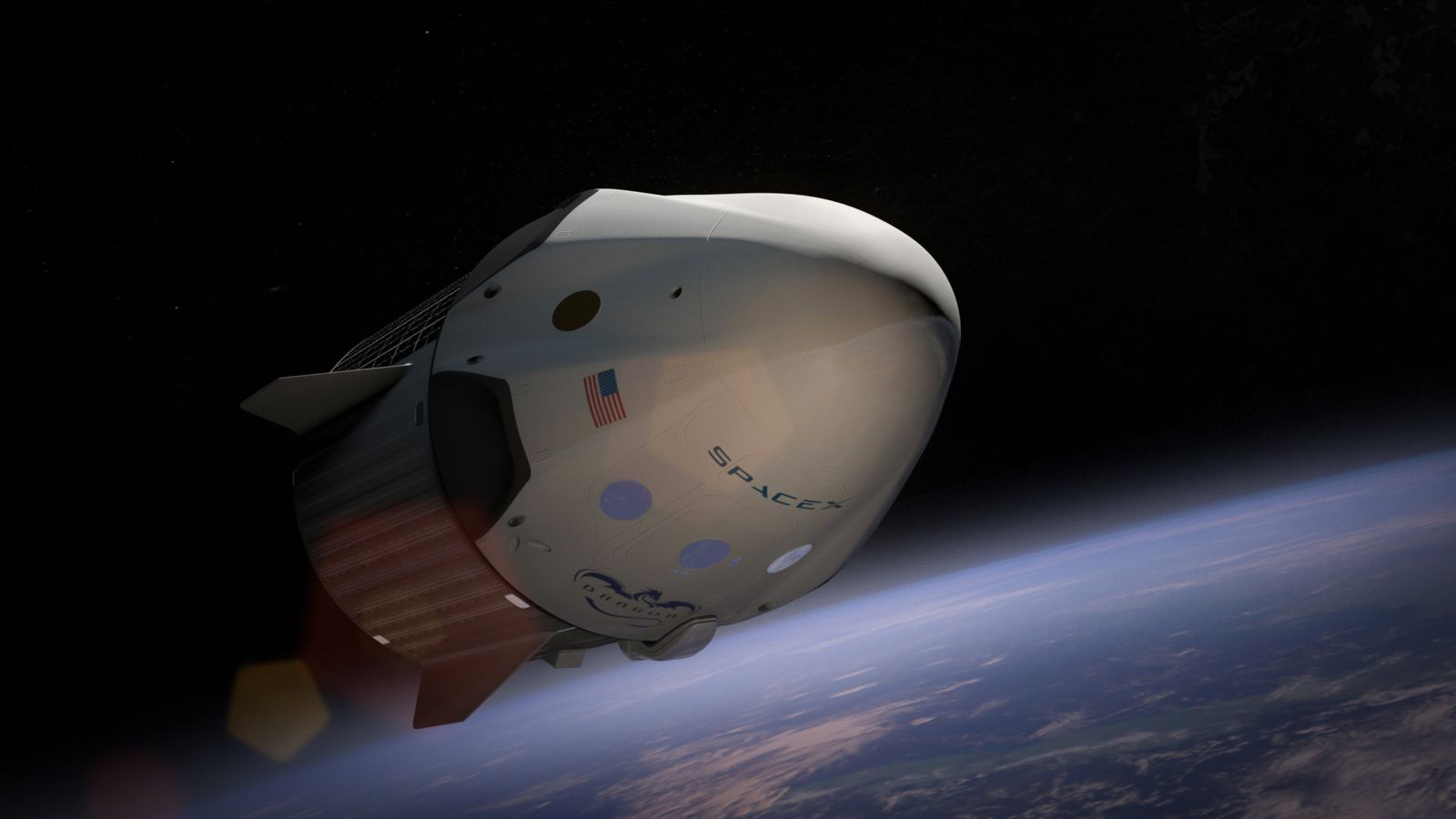
Astronauts undergo extensive medical testing before and after a mission, including measurements that document changes in stature and body composition. Soyuz crews traditionally return to the steppe of Kazakhstan. NASA’s Commercial Crew missions now also return by Dragon splashdown, and Crew-10 became the programme’s first crew to splash down in the Pacific off California in August 2025.
Wherever the landing occurs, gravity begins rewriting the measurements almost immediately. A crew member may be noticeably taller during the first examination, slightly shorter days later and close to their original height after several months.
The striking part is not simply that the spine lengthens. It is how faithfully the body records the environment around it. Remove ordinary loading for half a year and the skeleton, muscles and nervous system reorganise themselves around weightlessness. Restore gravity, and the body begins the slower work of becoming terrestrial again.
Somewhere above Earth, an astronaut is measurably taller than they were on launch day. After a Pacific splashdown or a landing on the Kazakh steppe, that borrowed height will begin to disappear.