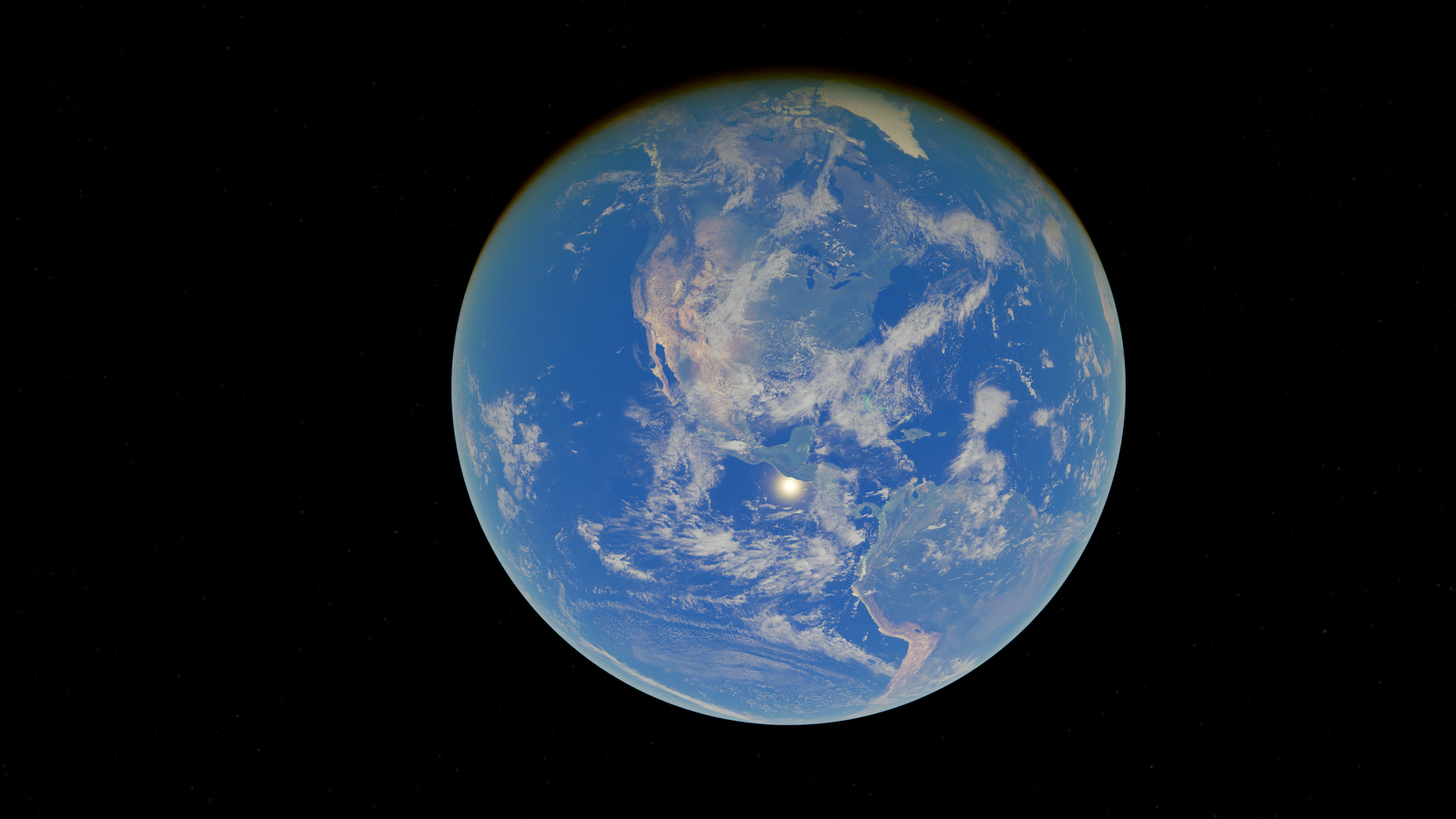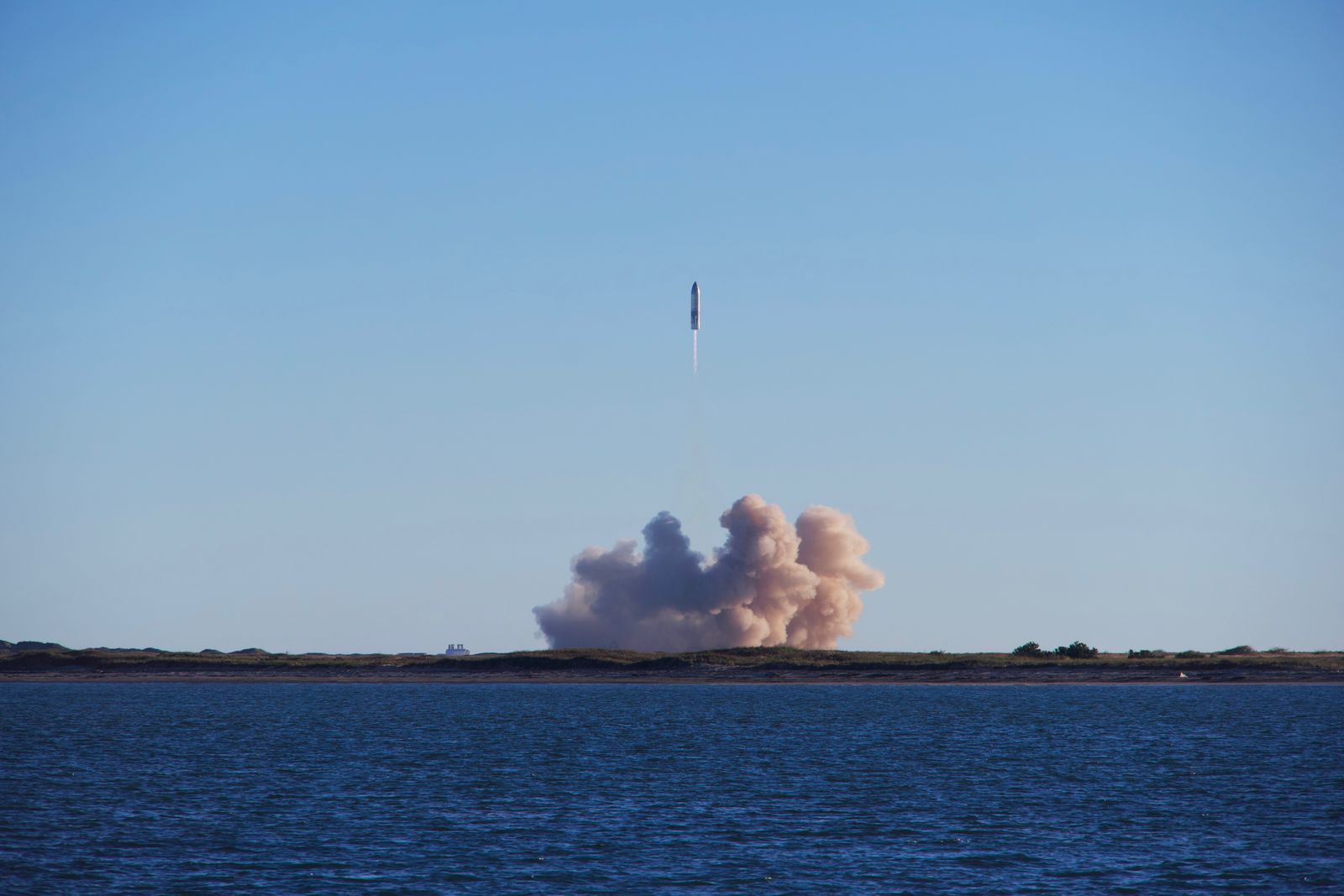
On October 24, 1946, V-2 No. 13 rose from White Sands Proving Ground in New Mexico carrying a 35-millimeter motion-picture camera developed by Clyde Holliday and his colleagues at the Johns Hopkins Applied Physics Laboratory. The camera climbed to about 65 miles, or 105 kilometers, while a reinforced steel film cassette preserved the first photographs of Earth taken from space, ten years and eleven months before Sputnik 1 became the first artificial satellite in orbit.
The V-2 did not circle Earth, transmit an image, or return intact. It followed a suborbital arc, exposed frames during the flight, and crashed into the desert, leaving investigators to recover the film from the wreckage.
Humans had already photographed Earth from high-altitude balloons. The Explorer II balloon reached 13.7 miles in 1935, high enough to reveal a broad horizon, but the October 1946 camera climbed more than four times higher and crossed the boundary now commonly used to mark the beginning of space.
A weapon rebuilt for science
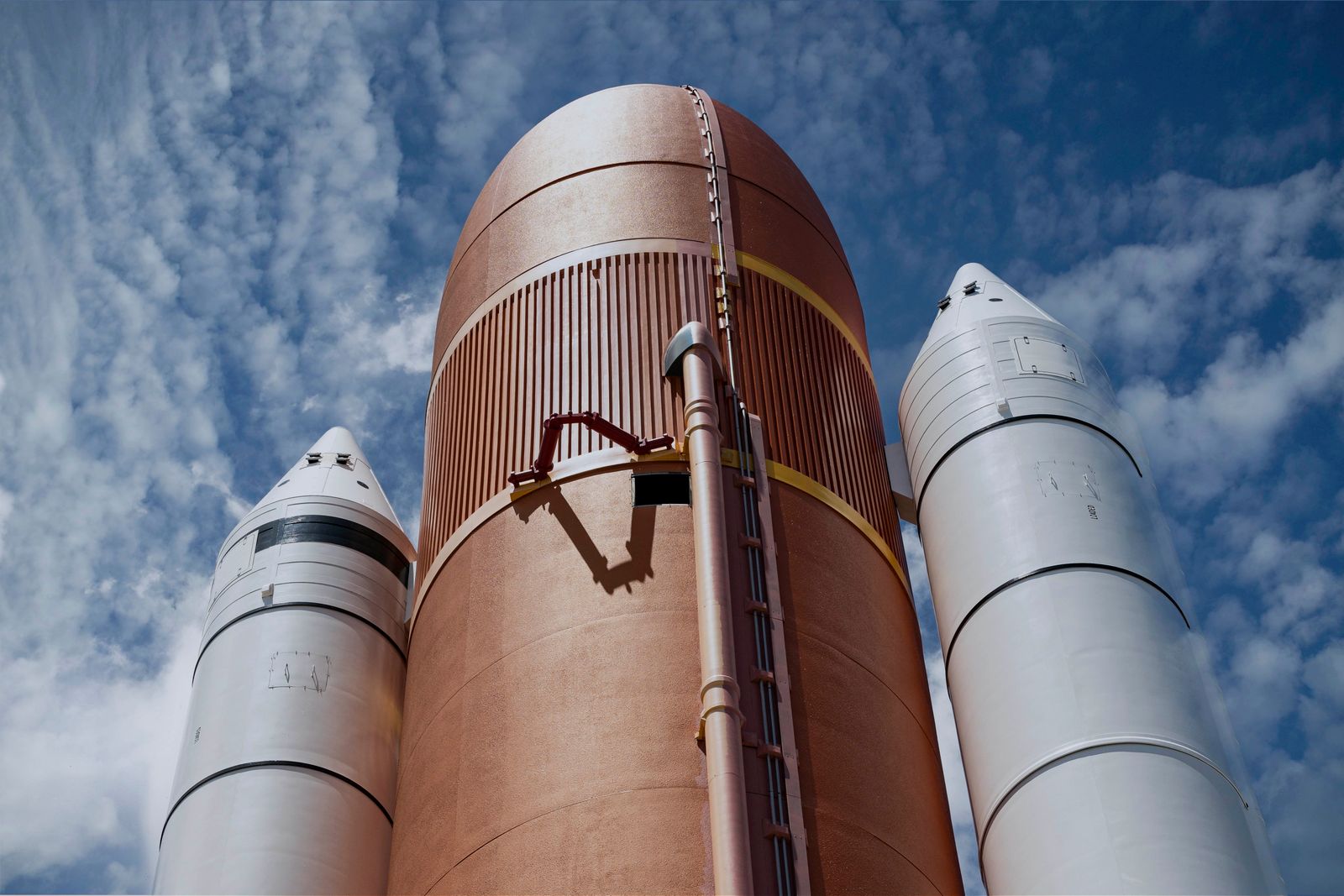
The vehicle beneath Holliday’s camera was the German V-2, originally known as the A-4. It was the first long-range ballistic missile, capable of carrying a roughly one-ton warhead over a distance of about 200 miles, and Nazi Germany used it against cities including London and Antwerp.
The missile’s technological achievement cannot be separated from the conditions under which it was produced. Mass production at the Mittelwerk underground factory relied on concentration-camp prisoners from the Mittelbau-Dora complex, where exhaustion, disease, starvation, executions, and brutal working conditions killed thousands of people.
The captured inventory inherited by the United States came from that weapons program. However, the surviving sources do not establish the manufacturing history of every individual component fitted to V-2 No. 13, so it would be too precise to claim that each part of this particular rocket came from a specific prison workshop.
As Germany collapsed in 1945, American forces seized V-2 components, documents, equipment, and unfinished missiles. Hundreds of railcars carried the material to the United States, where enough parts were sorted and assembled to support a substantial experimental launch program.
German specialists also arrived under the program that became known as Project Paperclip. National Archives records show that the United States expanded the operation despite the Nazi Party or SS backgrounds of some recruits, placing military and technical value ahead of the normal restrictions that would have governed their admission.
White Sands conducted its first captured V-2 launch in April 1946. The wider program eventually flew dozens of the rockets with ultraviolet spectrographs, cosmic-ray detectors, atmospheric instruments, biological payloads, cameras, and experimental guidance systems, establishing many of the methods still used by modern sounding-rocket missions.
How Holliday’s camera survived the flight
Clyde Holliday was an engineer at the Johns Hopkins Applied Physics Laboratory, which helped organize upper-atmosphere experiments aboard the captured rockets. APL’s institutional history credits Holliday as the camera developer behind the October 1946 photographs.
The payload used a 35-millimeter motion-picture camera configured to work automatically after launch. According to NASA’s history of the flight, it exposed one frame approximately every second and a half as the rocket climbed above New Mexico.
Taking pictures was only half the engineering problem. Because the rocket would not make a controlled landing, the exposed film had to survive an impact violent enough to destroy the camera around it.
The solution was a hardened steel cassette surrounding the film. The container did not make the V-2 reusable, but it gave the fragile photographic record a chance of surviving even if the airframe and camera were crushed.
V-2 No. 13 lifted off on October 24 and reached an altitude of about 65 miles. That placed the camera slightly above 100 kilometers, the altitude later adopted by the Fédération Aéronautique Internationale as the conventional boundary between aeronautics and astronautics.
After reaching the top of its trajectory, the rocket fell back toward White Sands. NASA records that it struck the ground at more than 340 miles per hour, turning much of the vehicle and its instrumentation into wreckage.
A recovery team found the steel cassette among the debris and discovered that the film inside had survived. The camera itself had been smashed, but the developed frames provided the first photographic record made while a camera was physically above the conventional edge of space.
What the first frames actually showed
The surviving pictures are grainy, monochrome, and far removed from the polished full-disk images associated with later spaceflight. They show broad stretches of the American Southwest, cloud systems, a distant horizon, and the black sky visible above the atmosphere.
The historical first rests on the camera’s altitude, not on the frames resembling the later Blue Marble or Earthrise photographs. The October 1946 sequence did not present Earth as a complete globe floating against space.
APL separately dates its first unmistakable composite view of Earth’s curvature to a camera flight on July 26, 1948. Photographs taken in sequence were assembled into a panorama that made the planet’s curved horizon much clearer than it had been in the first 1946 frames.
The early pictures nevertheless changed the available perspective. Holliday later described them as showing “how our Earth would look to visitors from another planet coming in on a spaceship.”
That observation was carefully worded. The pictures were not evidence that humans had left Earth, but they allowed people on the ground to see their surroundings from a camera that had briefly travelled beyond the altitude now used to define space.
The experiment also showed that photographic film could be carried through launch acceleration, exposed automatically in near-vacuum conditions, and recovered after a ballistic descent. That combination turned a missile test vehicle into a functioning scientific camera platform.
The boundary the camera crossed
The 100-kilometer Kármán line was not an internationally established boundary when the photographs were taken. The FAI later adopted 100 kilometers as a practical dividing line, although the atmosphere does not end abruptly there and other organizations have used different thresholds.
The October flight was also not the first V-2 to climb above 100 kilometers. A German V-2 test launch on June 20, 1944, reportedly reached roughly 175 kilometers, making the camera flight’s distinction photographic rather than the first arrival of a human-made object in space.
What had not yet happened in 1946 was orbit. The Soviet Union launched Sputnik 1 on October 4, 1957, creating the first artificial satellite and beginning the period usually described as the Space Age, a milestone covered in Space Travel’s spaceflight timeline.
Orbit required enough horizontal velocity for a spacecraft to continue falling around Earth instead of returning directly to the surface. The 1946 V-2 reached space briefly, while Sputnik remained above the atmosphere and completed repeated circuits of the planet.
The first photograph of Earth from orbit came later still. Explorer 6 transmitted a crude image in August 1959 from thousands of miles above Earth, following the United States’ first successful satellite, Explorer 1, in January 1958.
NASA itself did not begin operations until October 1958. Holliday’s camera therefore flew before NASA, before any artificial satellite, and before engineers had demonstrated that a recoverable photographic experiment could be replaced by an orbital imaging system.
From a desert film cassette to Earthrise
The October flight was the beginning rather than the end of rocket-borne photography. Later V-2 and Aerobee missions carried improved cameras higher, returned longer sequences, and produced mosaics covering enormous stretches of terrain and weather.
Sounding rockets never disappeared after satellites arrived. They remain useful because they can lift an instrument above most of the atmosphere for a few minutes, test equipment in space conditions, and return payloads without the expense of placing them permanently into orbit.
Twenty-two years after Holliday’s first frames, Apollo 8 astronaut William Anders photographed Earth rising above the Moon on December 24, 1968. That image, explored in Space Travel’s account of the Earthrise experience, showed an entire living world suspended beyond a dead lunar horizon.
The visual distance between the two images is enormous, but the mechanical lineage is direct. Both depended on carrying a camera somewhere it had never been, pointing it back toward Earth, and preserving what the camera saw long enough for people at home to look at it.
The first frames came from a weapon developed for war, reconstructed from captured parts, and tied to a system of forced labor whose victims must remain part of the history. Their film survived inside a dented steel container in the New Mexico desert, preserving the moment Earth first appeared in a photograph taken from space.