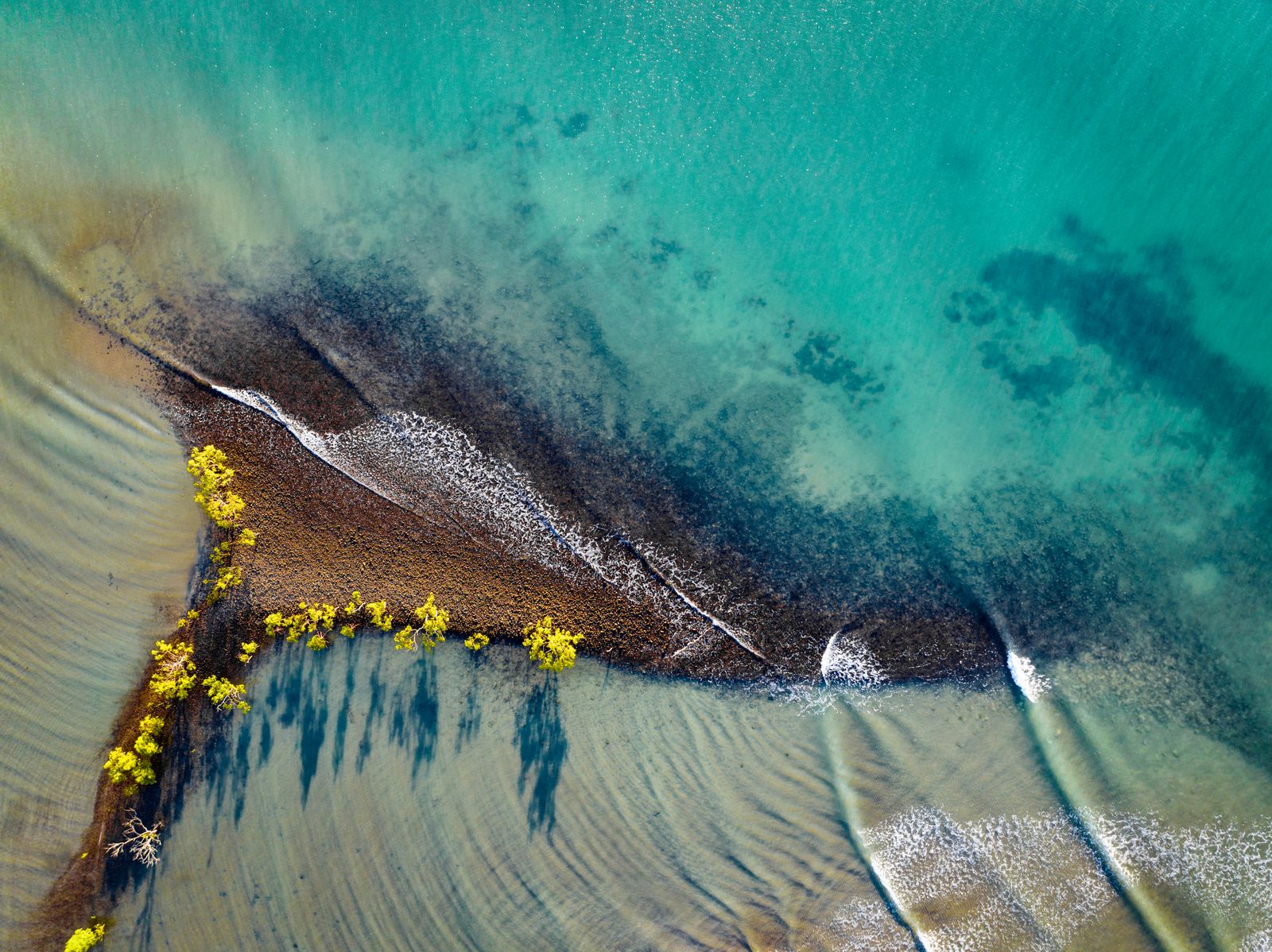
A mangrove forest looks unremarkable from a boat. Tangled roots arching out of brackish water, leaves the dull green of an old tarpaulin, a smell somewhere between low tide and wet compost. And yet every hectare of that muddy fringe stores between three and five times more carbon than a hectare of Amazonian rainforest, most of it locked not in the trees but in the black, waterlogged soil beneath them, where oxygen cannot reach and decay barely happens.
The number comes from repeated measurements across tropical coastlines. Reporting from Ghana’s Volta Region, Global Voices notes that mangroves can hold up to five times more carbon per hectare than terrestrial forests, and that preserving just one percent of remaining global mangrove cover would keep roughly 200 million tons of carbon out of the atmosphere. The mechanism is unusual: it is not photosynthesis that makes mangroves exceptional. It is anaerobic mud.
The trees are the smaller half of the story
In a rainforest, most of the carbon sits above ground — trunks, branches, canopy. Roughly half of a tropical rainforest’s carbon is in its biomass. In a mangrove forest, that ratio flips. Most of the stored carbon sits below the waterline, buried in peaty sediment that can run several metres deep in older stands.
The reason is chemistry. Mangrove soils are permanently flooded by tides. Waterlogged soil holds almost no dissolved oxygen. The microbes that would ordinarily break dead leaves and fine roots into carbon dioxide cannot function without oxygen, so they work slowly, incompletely, and via pathways that generate far less CO₂ than dry-soil respiration. Fallen litter accumulates faster than it decomposes. Century after century, the forest is quietly composting itself into a carbon vault.
A rainforest floor, by contrast, is one of the busiest recycling operations on Earth. Fallen leaves can be reduced to skeletal veins within weeks. The carbon that mangroves lock away for a thousand years, a rainforest exhales back within a season.
Salt is the filter that makes it work
Mangroves are one of a tiny group of woody plants that tolerate seawater. Only a small number of tree species worldwide can do it. Their roots either exclude salt at the membrane, excrete it through leaf glands, or shunt it into sacrificial leaves that yellow and drop. That physiological cost is real — mangroves grow more slowly than a lowland dipterocarp — but the payoff is exclusive access to a habitat almost nothing else can occupy.
Salinity also shapes the forest’s structure. Research examining mangroves along Colombia’s Caribbean coast found a clear inverse relationship between soil salinity and above-ground biomass, with the tallest, densest stands clustering where freshwater inflow diluted the sea. Where salinity climbed, the trees stayed short and scrubby but the soil kept accumulating carbon regardless. The below-ground store is remarkably resilient even when the canopy above it looks stunted.
How the numbers actually add up
A well-developed mangrove forest in Indonesia or the Sundarbans can store several times more carbon per hectare than a mature tropical rainforest when soil is included, with the mangrove’s advantage lying almost entirely below ground rather than in the smaller trees above.
Multiply that by scale and the climate arithmetic gets interesting. A recent global cost model, summarised by Mongabay in July 2025, estimated that restoring 1.1 million hectares of degraded mangrove worldwide would remove up to 0.93 gigatons of CO₂ from the atmosphere at a median cost of $8,143 per hectare — roughly $11.49 per tonne of CO₂. That is cheaper than most engineered carbon capture and comes with a fisheries nursery attached.
Why the loss rate matters more than the growth rate
The uncomfortable side of the ledger is that mangroves release their stored carbon extremely fast when disturbed. Drain a mangrove for a shrimp pond and the soil, suddenly exposed to oxygen, begins oxidising centuries of accumulated organic matter within months. A hectare cleared for aquaculture can vent hundreds of tonnes of CO₂ over a decade — the same amount it took the forest a thousand years to bury.
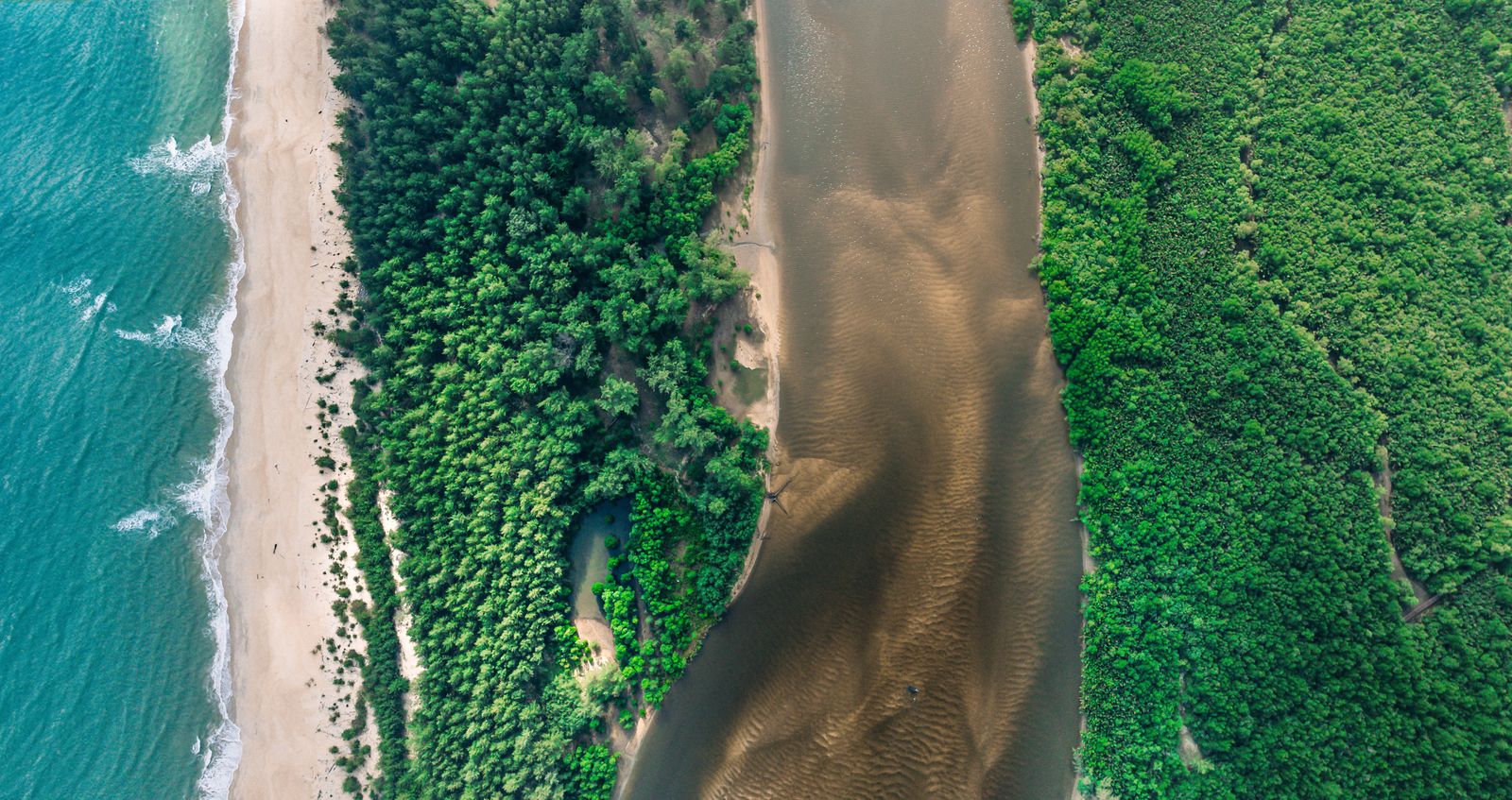
Significant global mangrove cover was lost in the late twentieth century, mostly to shrimp farming, palm plantations, and coastal construction. Ghana has watched a substantial portion of its mangrove area disappear over the past four decades, driven by the concentration of the country’s industry in coastal zones. In Mexico, reporting from Acapulco documents the collapse of urban mangrove belts that once buffered the city against the hurricanes now arriving with greater frequency and intensity.
The Senegal problem — and what it teaches
Not every restoration lives up to the arithmetic. A blue-carbon project launched in Senegal’s Sine-Saloum and Casamance deltas in 2008 aimed to plant mangroves across more than 10,000 hectares and sell the resulting sequestration as carbon credits. When geographers went back to check, using satellite imagery and ground surveys, the results were sobering.
According to an analysis published in The Conversation, 36 percent of the restoration plots were complete failures — no surviving mangroves at all — and across the entire project only 18 to 20 percent of planted seedlings survived. Verra had certified the credits in 2020 based on measurements of surviving trees extrapolated to the full 10,000 hectares. The gap between certified and actual carbon storage worked out to roughly 168,000 tonnes of CO₂, worth between $2 million and $7 million in credits at market rates.
The ecological reason was straightforward and instructive. Seedlings had been planted in salty mudflats far from existing mangrove stands, on plots too large and too far from tidal channels to receive the regular flooding mangroves need. Mangroves are not generic trees. They require a specific hydrology — tides that flood and drain on a rhythm the seedling can survive. Plant them in the wrong salinity, or leave them stranded above the high-water mark, and they die within a season.
Where the storage is densest
The champion mangroves are in Southeast Asia. Indonesia holds a significant share of the world’s mangrove area, with deltas along Sumatra, Borneo, and Papua that have been building peat for millennia. Some Indonesian mangrove soils contain extraordinarily high carbon densities — far exceeding the concentrations found in most terrestrial forests.
Elsewhere the picture is patchier. A 2025 study in Frontiers in Marine Science tracking restoration in Puerto Rican mangroves after Hurricane María found that active restoration significantly boosted carbon storage compared with sites left to recover on their own, but only when species selection and hydrological reconnection were matched to the pre-disturbance condition. Planting the wrong species in the right mud, or the right species in the wrong mud, produced the same disappointing curve.
The wider blue-carbon ledger
Mangroves are the most famous blue-carbon ecosystem but they are not alone. Salt marshes and seagrass meadows use the same anaerobic-soil trick, and Latin American researchers have been pressing for these habitats to receive the same climate-policy attention as forests. Scientists across Colombia, Ecuador, and Brazil have advocated to have coastal wetlands, páramos, and mangrove-adjacent estuaries counted formally in national climate inventories.
The reasoning is that a hectare of restored coastal ecosystem often outperforms a hectare of restored dryland forest on carbon metrics, storm buffering, and fisheries productivity simultaneously. On the terrestrial side, Space Travel has covered how regrowing marginal farmland can curb emissions without cutting food output — a similar principle applied to abandoned upland fields. The coastal version simply happens to be denser per hectare because the mud does the archiving.
The stakes of getting the ecology right
Restoration only delivers if the hydrology is honest. That means breaching old aquaculture dikes so the tide can return, choosing sites within a kilometre of a natural seed source, and matching species to salinity gradient — Rhizophora in the wetter mid-intertidal, Avicennia higher up where salt concentrates, Sonneratia at the seaward edge where waves are strongest. Get it right and a mangrove can re-establish itself from seedling to closed canopy in twelve to fifteen years.
Get it wrong and the seedlings die within a wet season, the soil oxidises, and the project generates credits for carbon that was never actually stored. A separate analysis by Eco-Business tracking the UN’s global deforestation trend found that while overall forest-loss rates are slowing, coastal ecosystem losses remain the hardest category to reverse because the underlying hydrology is often permanently altered by roads, seawalls, and drainage.
What a hectare actually looks like
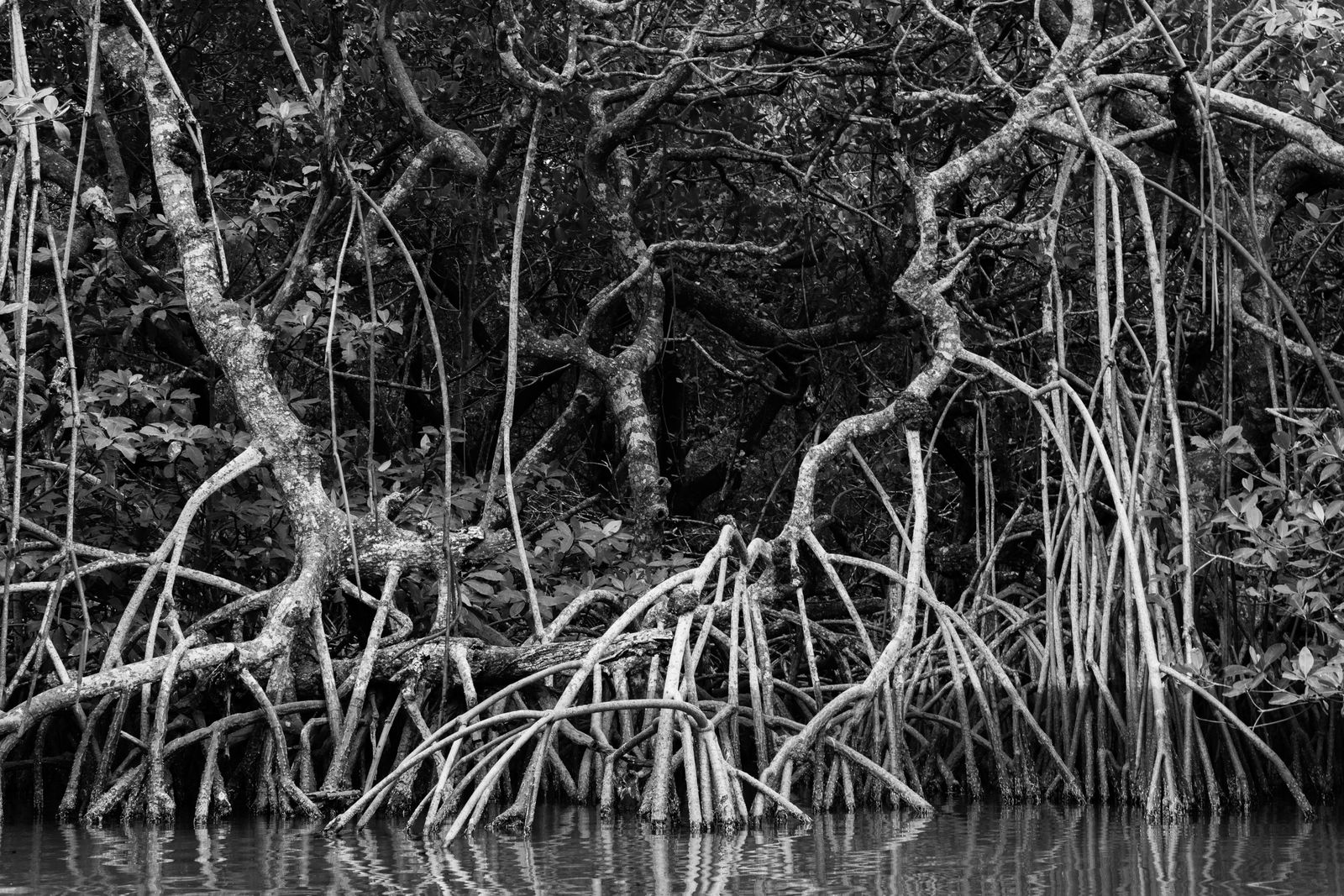
Stand at low tide in a healthy mangrove in Raja Ampat or the Sundarbans and the geometry becomes visible. The stilt roots of Rhizophora arch a metre or two above the mud, dripping with tannin-stained water. Fiddler crabs move sideways across sediment black as espresso grounds. The mud is soft enough to swallow a boot to the knee, and every cubic metre of it holds substantial amounts of carbon — the CO₂ equivalent of a full tank of petrol, pressed down and forgotten.
A hectare is a hundred by a hundred metres. The carbon in that square would fill several shipping containers if it were dry. Instead it sits under water, layered with the crab burrows and root fragments of a thousand tides, adding a millimetre or two of new sediment each year. If sea levels rise gently, the mud rises with them. If sea levels rise faster than the sediment can accrete — which is now happening in parts of the Bay of Bengal — the forest drowns, the peat oxidises, and a millennium of storage returns to the sky within a human lifetime.
That is why the three-to-five-times figure matters as both a promise and a warning. The same anaerobic mud that makes a mangrove the densest carbon store on the tropical coast is also the fastest to fail when disturbed. The forests are archives. The archives are only as safe as the tide that keeps them flooded.