On the evening of 7 September 1854, London physician John Snow asked the Board of Guardians of St James’s parish to stop access to the Broad Street water pump in Soho. The handle was removed the following day. Across the surrounding quarter, Snow later counted more than 500 fatal cholera attacks within 250 yards in ten days. The outbreak was already declining, so the handle cannot honestly be credited with ending it. What reshaped public health was the investigation around it: Snow linked deaths to a shared water source, tested that pattern against people who escaped the outbreak, and persuaded officials to act before they could identify the organism responsible.
The pump drew from a brick-lined well in a district where cesspools, house drains and sewers sat dangerously close together. A later parish investigation, aided by the Reverend Henry Whitehead, identified a plausible route by which household waste from 40 Broad Street could reach the well through defects around a nearby cesspool and drain. The handle was the visible intervention; the durable breakthrough was the combination of exposure histories, spatial evidence, comparison groups and a source that officials could isolate.

The outbreak that emptied a neighbourhood
Soho was not literally sewerless. A sewer ran within a few yards of the Broad Street well, but many houses still relied on cesspools and poorly connected private drains. Waste could collect beneath or beside crowded buildings while residents drew drinking water from local wells. The city’s pipes, drains and wells existed as overlapping systems rather than a safely separated network.
The eruption began late on 31 August or early on 1 September. Snow later counted 197 deaths on 1 and 2 September alone, and he wrote that more than three-quarters of residents had fled the hardest-hit streets within six days. The sudden emptiness helped reduce later exposure, but it also made reconstruction harder because survivors and witnesses had scattered.
Cholera is an acute infection caused by consuming food or water contaminated with Vibrio cholerae. In severe cases, violent watery diarrhoea can produce fatal dehydration within hours without treatment. That speed made the Broad Street outbreak feel less like a conventional epidemic than a street-by-street collapse.
London medicine still leaned heavily on miasma theory, which blamed disease on foul air and decomposing matter. Snow was not a neutral observer waiting for a map to suggest an answer: he had argued in 1849 that cholera spread through contaminated water. The Soho outbreak gave him a chance to test that hypothesis against individual lives, addresses and drinking habits.
Snow’s evidence was bigger than a map
Snow obtained lists of registered deaths and went house to house. Among the 83 deaths he examined, ten occurred in houses nearer another pump; in eight of those cases, the victim either preferred Broad Street water or attended school near it. Within the area naturally served by Broad Street, he recorded 61 people who drank the water, six cases with no obtainable information and six in which he was told the deceased had not drunk it before becoming ill.
That method mattered because distance alone could mislead. Some people died farther away after drinking Broad Street water at work, at school or during a visit. Others lived beside the pump but used a different source. Snow was reconstructing exposure, not merely drawing a circle around corpses.
The map that became famous was published with his 1855 account. It placed a black bar at each address for every death and marked nearby public pumps; the clustering around Broad Street was immediate, while the street layout showed where another pump was actually easier to reach. The surviving map did not generate Snow’s theory, but it made a complex field investigation visible at a glance.
The brewery provided one of the clearest comparisons. More than 70 men worked beside the pump, yet none suffered severe cholera and only two were mildly indisposed. They received malt liquor, had access to a deep well and New River water, and, according to the proprietor, did not fetch water from the street pump.
At the Poland Street workhouse, only five of 535 inmates died, despite the surrounding mortality; the institution had its own well and did not use Broad Street water. Miles away at West End, Hampstead, a 59-year-old widow died after having bottles of her preferred Broad Street water delivered by cart. A visiting niece drank it, returned to Islington and died too, although neither neighbourhood had a comparable outbreak.
What removing the handle did, and did not do
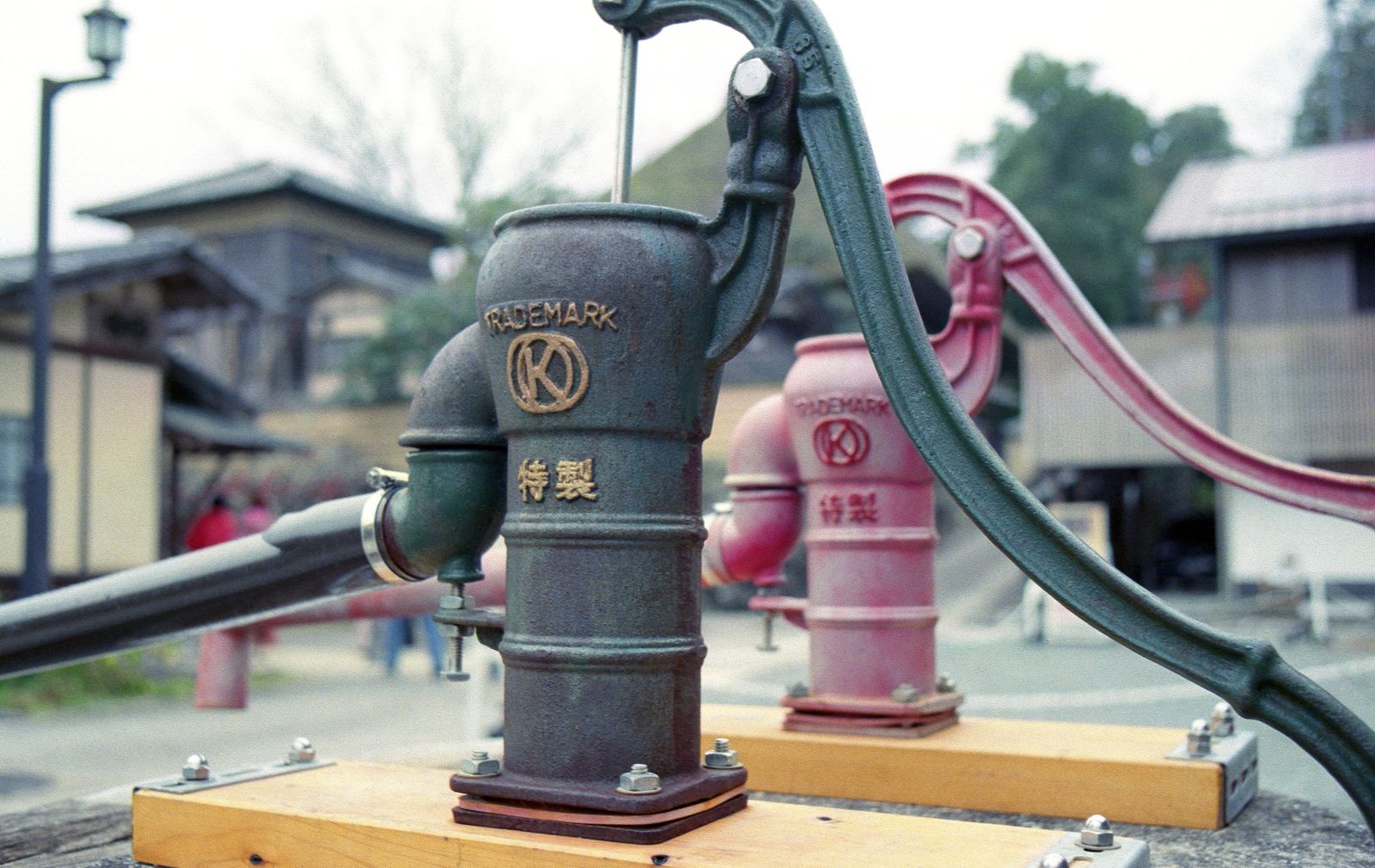
Snow met the parish guardians on Thursday evening, 7 September. They accepted his recommendation, and the handle came off on 8 September. That sequence matters: Snow did not personally wrench it from the pump, and the intervention was not a controlled experiment performed at the height of an expanding epidemic.
Snow’s own table showed 143 attacks on 1 September, 116 the next day and 54 the day after that. By 8 September, there were 12. He later wrote that the outbreak had declined so far before the pump was disabled that it was impossible to know whether the well still contained the active cholera poison.
That does not make the decision meaningless. Removing the handle stopped further use of a suspected common source, converted an invisible risk into a controllable object and demonstrated that officials could intervene on epidemiological evidence before laboratory proof existed. Its value was precautionary and institutional, not a claim that one piece of iron abruptly ended the epidemic.
The physical route emerged later. Whitehead traced an early case to five-month-old Frances Lewis at 40 Broad Street. Her mother had soaked soiled cloths and emptied the wash water into a yard sink or the nearby cesspool. The parish inquiry then documented defects in the house drainage and the close relationship between cesspool, drain and well. That work supplied the plumbing explanation Snow had not been able to prove when the handle was removed.
Why acceptance took longer
Snow’s conclusion did not instantly overturn miasma theory. His examination of the pump water had not produced decisive physical proof, the germ itself was not yet accepted as the cause, and the epidemic’s decline before the intervention complicated any claim that removal alone proved the case. The evidence was powerful, but it arrived inside a profession still arguing over what counted as proof.
The bacterium was, in fact, being seen elsewhere at almost the same moment. Filippo Pacini described the cholera vibrio in Florence in 1854, while Robert Koch identified it independently in India in 1883. Snow died in 1858, aged 45, before bacteriology supplied the mechanism that would make waterborne transmission easier to accept.
That same summer, London endured the Great Stink. Sewage made the Thames so foul that Parliament soaked curtains in chloride in an effort to mask the smell and considered moving its business. The crisis accelerated political support for major drainage works, but plans for intercepting sewers had already been developing; the smell did not single-handedly invent Bazalgette’s system any more than the pump handle single-handedly ended cholera.
Work on Joseph Bazalgette’s main sewer network began in 1859 and expanded through the following decades. Much of the Victorian system remains in service. The network separated everyday urban life from waste that had once collected beneath homes and in local drains, even though sewage treatment and river pollution remained problems for later generations.
From a Soho well to closed-loop spacecraft
The Broad Street case endures because it joined several kinds of evidence: where people became ill, what they consumed, who escaped, how infrastructure connected homes to a source and what happened when access was cut off. Modern outbreak teams add laboratory testing, genomic sequencing and formal statistical models, but they still ask versions of Snow’s practical questions. Who was exposed, to what, where and when?
A crewed spacecraft makes those questions unusually urgent. The International Space Station’s Environmental Control and Life Support System collects wastewater, humidity from breath and sweat, and water recovered from urine, then filters and treats it for reuse. In 2023, NASA reported that the system had demonstrated a 98 percent water-recovery goal, with sensors checking purity and unacceptable water sent through treatment again.
That is not a direct technological line from Snow’s notebook to the ISS. It is a shared risk geometry: many people depend on one compact water loop, contamination can spread before its source is obvious, and the response must identify, isolate and correct a failing component. Space Travel has examined the microbial side of that problem in its coverage of keeping spacecraft water safe over long missions.
A Mars expedition would magnify the stakes. Crews would spend months in transit and remain far from rapid resupply or evacuation, so water recovery, microbial control and repairability have to function as one system for years. The practical challenge is not captured by a universal 99 percent threshold or a single 900-day transit figure. It is the broader demand for closed-loop recycling that can keep people alive far from Earth.
The pump that remains
Broad Street later became Broadwick Street. A replica pump was installed nearby in 1992, removed during redevelopment in 2015 and unveiled closer to the original site in 2018. It has no handle, a deliberate feature of the memorial, and stands beside the John Snow pub rather than above the working well that supplied the neighbourhood in 1854.
The Soho around it has been rebuilt, resurfaced and transformed into a district of restaurants, shops and offices. The original public pumps disappeared in the 19th century, and the contaminated well is no longer visible. What remains is an absence: the place where a handle should be, marking an intervention whose popular legend became cleaner and simpler than the evidence behind it.
In surviving copies of Snow’s 1855 account, the black bars still crowd the addresses around Broad Street. On today’s pavement, the handleless replica turns that printed cluster back into an object at human scale. Between the bars and the missing iron lies the real change: disease became something a city could trace through pipes, habits and geography before it could see the pathogen itself.