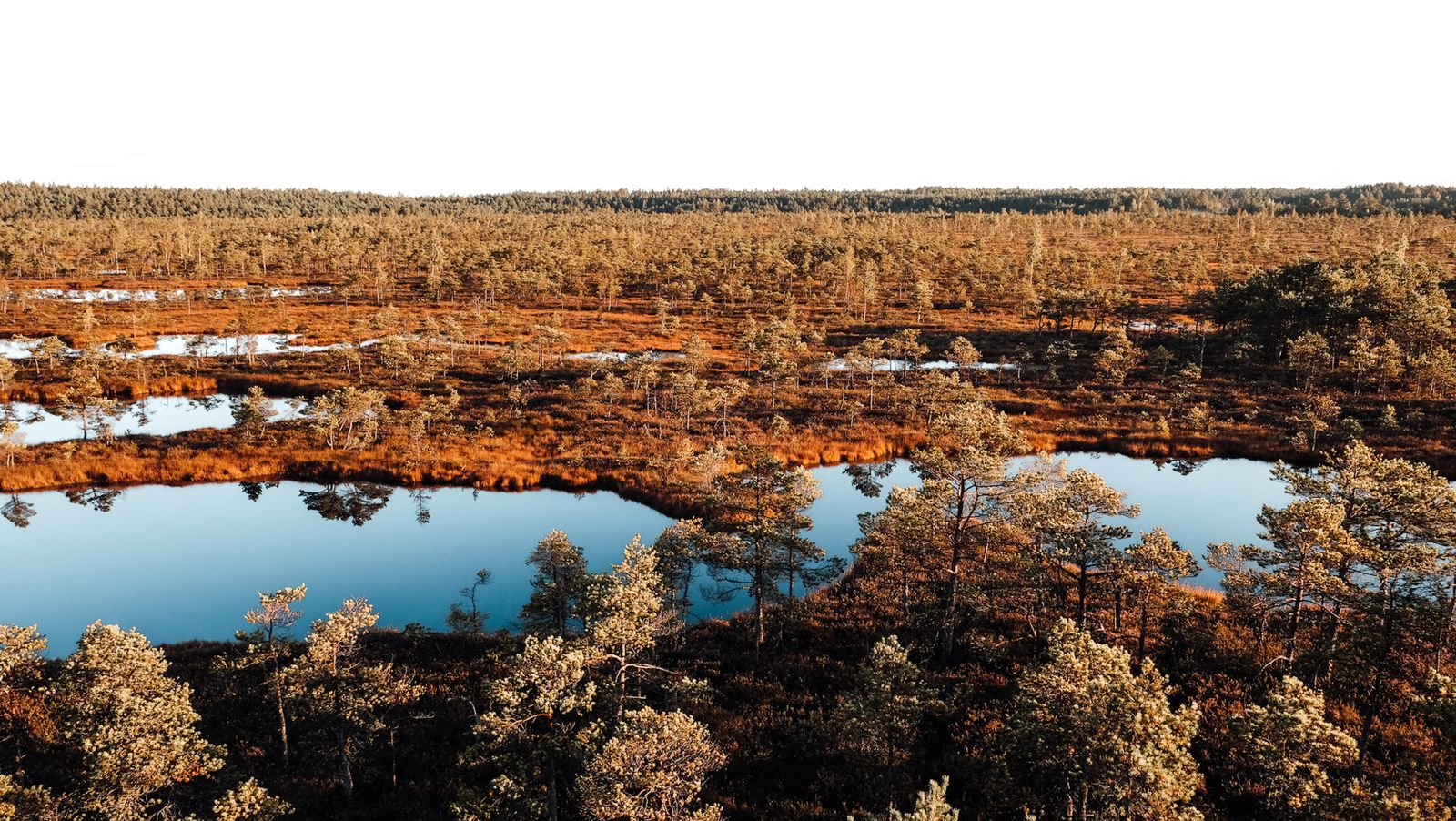
A drained peat bog three metres deep can release, hectare for hectare, more carbon into the atmosphere than felling the same area of Amazon rainforest. The reason sits underfoot rather than overhead. Peatlands cover just 3% of Earth’s land surface but hold roughly 30% of terrestrial carbon — about twice what all the world’s forests store combined. A tropical rainforest keeps most of its carbon in living wood and leaves. A bog keeps its carbon in a black, waterlogged sponge of half-decomposed plants that has been building up, millimetre by millimetre, since the last ice age.
Cut a rainforest down and you release the carbon in the standing trees. Drain a bog and you unlock the carbon in every dead sphagnum stem laid down over the last 10,000 years. The felled forest can, in principle, grow back within a human lifetime. The peat cannot. That asymmetry — a few metres of soggy brown mat against a century of canopy — is why hydrologists and climate scientists keep insisting that a shallow bog in Sumatra or the Congo Basin is, tonne for tonne, one of the most dangerous places on Earth to put a shovel.
What peat actually is
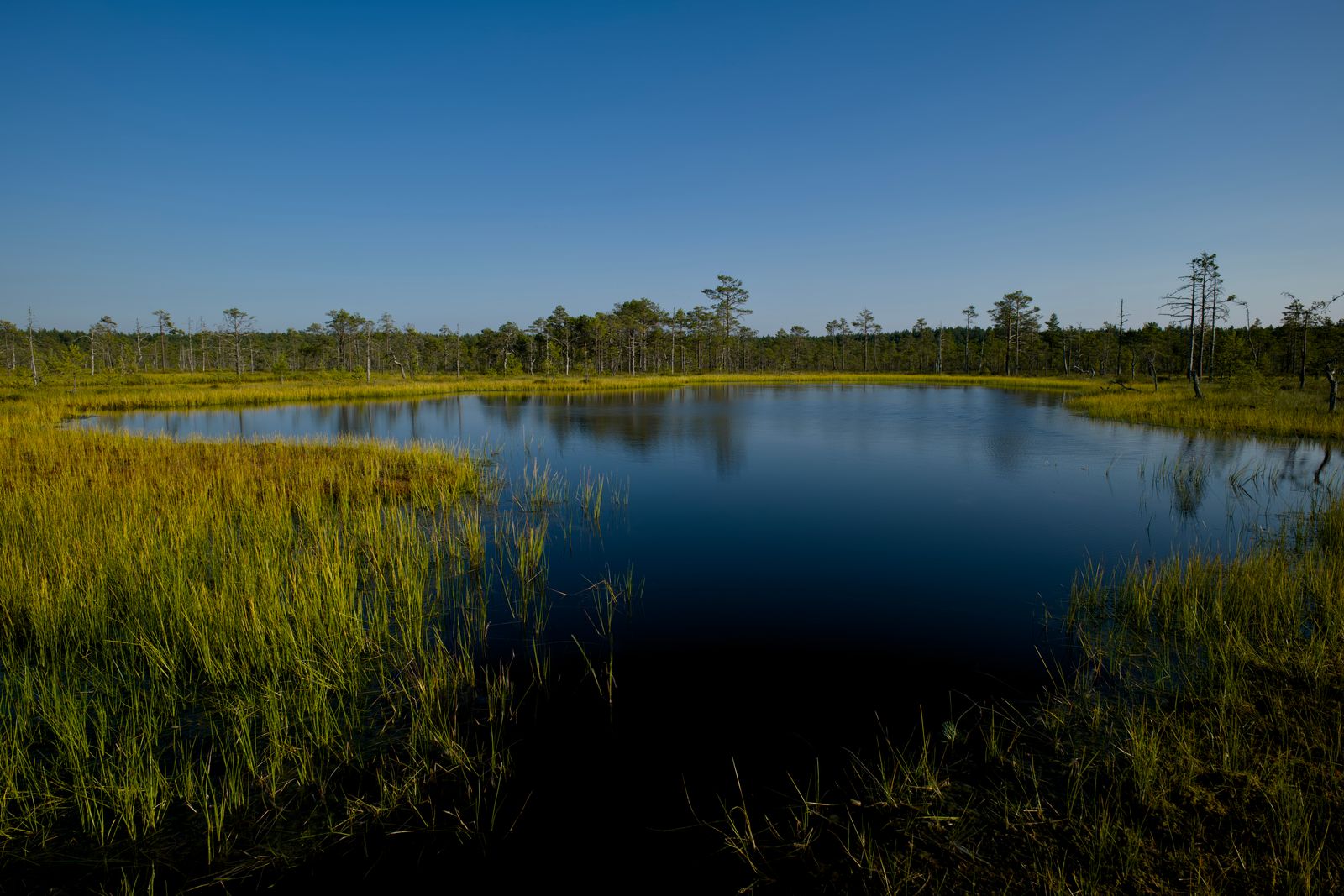
Peat is a compost heap that never finished composting. In a healthy bog, the ground is waterlogged year-round. Water fills the pore spaces between dead moss and sedge, choking off oxygen. The microbes that would normally chew through fallen plants and exhale CO₂ can barely function. Decomposition slows to a crawl. What should have rotted in a season instead stacks up over centuries, compressing into a dense, dark, carbon-rich layer.
A tropical rainforest soil, by contrast, is aerobic and warm. Leaf litter that falls in January is gone by June. The forest’s carbon is stored above ground — in trunks, branches, roots — not in the soil beneath.
A peatland flips that arithmetic. In lowland tropical peat swamps of Borneo and Sumatra, the peat layer can run 8 to 12 metres deep, occasionally deeper. Each cubic metre is packed with organic carbon accumulated over roughly 5,000 to 10,000 years. Drain it, and every one of those years becomes available to the atmosphere.
The moment the water table drops
Draining a bog is usually done for a reason: oil palm, cattle pasture, forestry, or arable crops. The technique is straightforward. Cut a network of ditches, install pumps or sluices, let gravity pull the water table down by a metre or two. Within weeks the surface is dry enough to walk on. Within months it is dry enough to plant.
Underneath, something else is happening. Oxygen floods into peat that has not seen it since the pyramids were built. Aerobic microbes wake up. They begin doing what microbes do — eating carbon-rich plant matter and exhaling carbon dioxide. The peat literally shrinks. Tropical peatlands drained for plantations subside at rates of roughly 3 to 5 centimetres per year, and most of that lost thickness is carbon vented upward as CO₂.
The ditch is not a bystander
For years, the ditches themselves were treated as plumbing. Recent fieldwork has upended that assumption. In 2022, Kuno Kasak, a professor of environmental technology at Estonia’s University of Tartu, began measuring greenhouse gases from the water-filled canals cut through oil palm plantations in Sarawak, on Malaysian Borneo. What he found, published in Scientific Reports on October 23, 2025, was that methane from the drainage canals accounted for as much as 10% of the total greenhouse gases from a given hectare — while the ditches covered no more than 4% of the plantation area.
Methane is more than 20 times more effective than CO₂ at trapping heat over a century, and it is responsible for nearly a third of the global temperature rise since the industrial revolution. Kasak’s findings point to emissions from ditches having been underestimated in global carbon accounting, since these waterways are often left out of the calculations altogether.
Chris Evans, a peatland biogeochemist at the UK Centre for Ecology and Hydrology who was not involved in the study, put the mechanism plainly: drainage effectively transfers the methane emission from the peat itself into the canal network. Evans has described watching bubbles rise behind his boat on a plantation canal, the water fizzing as gas escaped the ditch bottom. That fizz is ebullitive methane flux — sudden bursts of gas from anaerobic decomposition in the ditch sediment, difficult to model and, until recently, largely uncounted. Evans has separately argued that waterborne carbon leaching from ditches and canals is a third leakage pathway that belongs in the same greenhouse gas balance, alongside the CO₂ and methane.
How the numbers stack up against a rainforest
A hectare of intact Amazon rainforest holds roughly 300 to 400 tonnes of carbon in above-ground biomass. Clearing and burning it releases most of that within a few years. It is a large number and a real climate problem.
A hectare of tropical peatland with a three-metre peat layer can hold 3,000 to 6,000 tonnes of carbon — an order of magnitude more, and sometimes more still. When drained, that peat oxidises at a rate of roughly 55 to 100 tonnes of CO₂ per hectare per year, and it keeps doing so for decades, until the peat is gone or the water is put back. Add the methane from ditches, the nitrous oxide from fertilised plantation soil, and the occasional catastrophic peat fire, and the per-hectare emissions from a drained peat bog outrun those from a cleared rainforest within a single generation of land use.
A 2025 global analysis found that only 17% of the world’s peatlands sit inside protected areas, despite storing roughly twice the carbon of the planet’s forests on a fraction of the land. The mismatch between how much carbon peatlands hold and how much legal protection they receive is one of the widest in conservation.
The Congo, the Cuvette Centrale, and the fossil-fuel question
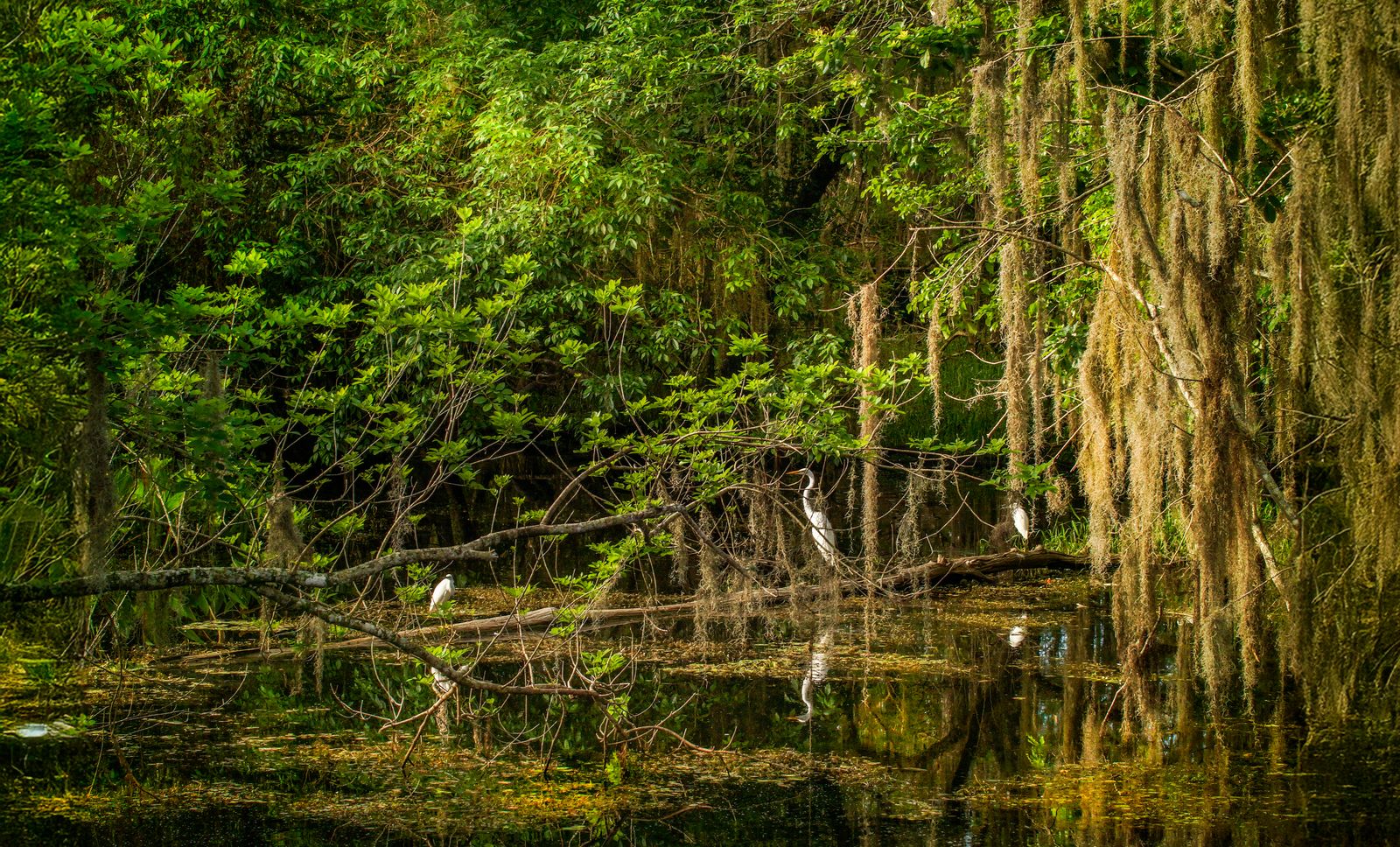
The largest tropical peatland complex on Earth is not in Southeast Asia. It sits in the central Congo Basin, straddling the Republic of Congo and the Democratic Republic of Congo — the Cuvette Centrale. First mapped in detail by University of Leeds researchers in 2017, it covers roughly 145,000 square kilometres and stores an estimated 30 billion tonnes of carbon, equivalent to about three years of global fossil-fuel emissions locked into a swamp forest that most of the world had never heard of a decade ago.
Recent oil and gas licensing rounds in the Democratic Republic of Congo have put dozens of exploration blocks up for auction that overlap large portions of the Cuvette Centrale. Environmental and human-rights organisations have warned that draining even a fraction of the bog for extraction infrastructure could release billions of tonnes of stored carbon — a scenario that would make the wells’ operational emissions look like a rounding error against the geological release from the peat itself.
ETH Zurich researchers studying the Ruki, one of the tributaries draining the Cuvette Centrale, have found it to be one of the darkest rivers in the world, stained near-black by dissolved organic carbon leaching from the peat. That waterborne carbon is another leakage pathway on top of the diffusive and ebullitive methane already measured in Sarawak’s ditches — evidence that a peatland’s carbon balance has to be tracked through water as well as air.
Britain’s shallow, ancient bogs
The problem is not confined to the tropics. More than 75% of the UK’s bogs, fens, marshes and other wetlands have been drained or destroyed since 1700, according to Bangor University wetlands researcher Christian Dunn. British blanket bogs are shallower than their Bornean cousins — often one to three metres deep — but they still hold enormous quantities of carbon accumulated over 5,000 to 10,000 years since the last glaciation.
When those uplands dry out, they do more than emit CO₂. They burn. In August 2026, firefighters battled a wildfire above Blaenavon in south Wales that spread across more than 4,000 hectares, with roughly 200 military personnel called in to support fire crews. Smoke was visible from Cardiff and Gloucestershire. If flames reach dried peat, the fire can smoulder underground and re-emerge weeks later somewhere else — a phenomenon that turns a surface fire into a slow-motion carbon release running centimetres beneath the boot.
Sphagnum, the ecosystem engineer
Sphagnum moss is the reason a bog is a bog. It can absorb well over twenty times its own dry weight in water. As it grows, it acidifies the surroundings, slowing bacterial activity further. Dead sphagnum layers compress into the peat below. Living sphagnum keeps the surface saturated, which keeps oxygen out, which keeps the peat locked.
On Holcombe Moor in the west Pennines, north of Manchester, restoration teams dug roughly 3,000 crescent-shaped “scallop bunds” in 2021, followed by another 700 in 2024 — shallow pools scooped into flatter stretches of peat with low-impact excavators, designed to trap rainfall that would otherwise sheet off the hillside. Sphagnum colonised many of the original bunds within about five years, and monitoring through the dry summer of 2025 found the bunded ground held moisture noticeably longer than the unrestored peat around it.
At Golticlay in northern Scotland, a wildfire swept through forestry in June 2018 and stalled when it reached recently restored peatland, where a raised water table had left the ground and vegetation too wet to burn.
The comparison that keeps holding
Coastal ecosystems tell a related story: mangroves are estimated to store three to five times more carbon per hectare than a rainforest on solid ground, for the same underlying reason. The pattern in both cases is the same as in a peat bog: the carbon is not in the canopy. It is in the waterlogged soil beneath, laid down slowly and released fast when the water goes.
A peatland is, in a sense, a very slow bank account. Deposits accumulate at roughly one millimetre of peat per year. A three-metre bog represents three thousand years of deposits. The withdrawal, when a drainage ditch is cut, happens in decades. There is no plausible replanting timeline that matches that release. Even under aggressive restoration, new peat forms at the same one-millimetre-a-year rate it always has.
Rewetting is doing something
A long-term study of a rewetted fen in northeastern Germany, tracked with eddy covariance instruments over more than a decade, found that annual carbon dioxide flux flipped from a net source to a net sink after rewetting — though the site’s combined CO₂ and methane output only settled in line with standard emission-factor estimates between 13 and 16 years after the water table was raised. Restoration works, in other words, but on a timeline measured in more than a single growing season.
Peatland ditches also complicate the accounting on the way back. A global meta-analysis of methane emissions from peatland ditches found that, even though ditches cover under 4% of drained peatland area, they offset around 12% of the methane-emission reductions that drainage itself produces. Blocking those ditches — with small dams, banks, or bunds — is one of the cheapest carbon interventions available per tonne avoided.
A study of a high-elevation tropical peatland at Cerro de la Muerte in Costa Rica has tracked dissolved organic carbon variations there to understand how these ecosystems leak carbon through water as well as air — another line of evidence that the peatland carbon balance is a multi-pathway problem, not just a matter of gas escaping the surface.
What the shovel does
A rainforest cleared is a forest lost. It is a large, visible, photographable disaster. A drained bog looks, at first, like an improvement. The ground is firmer. The mosquitoes are fewer. The land can be walked on, farmed, built on. The carbon release is invisible — a slow exhalation from soil that no camera can catch.
The peat layer under a plantation in Sarawak is not going to grow back in a human lifetime. Neither is the peat under a drained blanket bog in the Pennines, nor under any prospective oil block in the Cuvette Centrale. What was deposited across five to ten thousand years of stalled decomposition can be spent, atmospherically, in a matter of decades once oxygen gets in.
The comparison in the title is not a rhetorical flourish. It is arithmetic. A few metres of black, wet, ancient sponge, given air, releases more carbon than the towering green canopy of the same area. The forest lives above ground. The bog lives below it. When the water goes, so does the deeper store.