
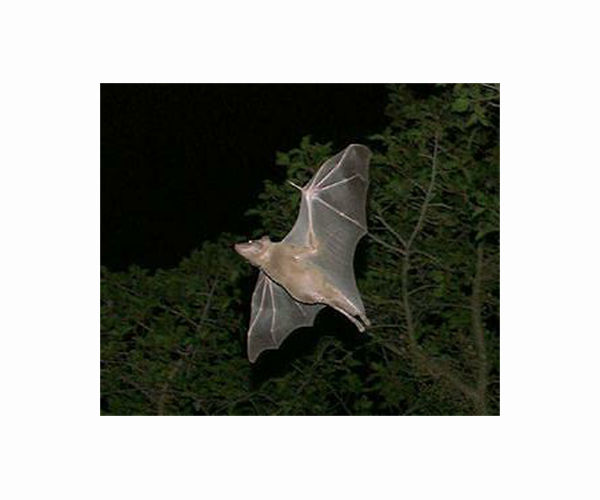
Urbanization leads fruit bats to adjust foraging strategies and diversify diets, a new study found.
Tel Aviv University researchers found fruit bats explored more when foraging in urban environments, which have a higher diversity of fruit trees than rural ones, and ate more types of fruits, according to the study published Monday in BMC Biology.
Furthermore, researchers found that even bats that roost in the countryside and commute nightly to forage in urban environments exhibited the same diversified pattern.
Researchers used GPS devices to track 39 fruit bats foraging in urban and rural populations, including 19 from two rural colonies and 20 from two urban colonies for more than a week.
A key goal of the experiment was to understand how animals adapt to urbanization.
"How animals cope with urbanization is one of the most central and important questions in ecological research today," study author Yossi Yovel in a press release.
"Understanding the ways in which animals adapt to urban areas can help us in our conservation efforts. The urban environment is characterized by fragmentation, and we currently have little understanding of how animals, especially small animals, like the bats, move and fly in such areas," said Yovel, a professor at Tel Aviv University.
