
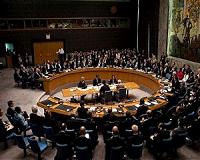
The United States has asked the UN Security Council to discuss Iran's recent ballistic missile launches during a meeting on Monday, the US ambassador said.
The United States is "deeply concerned" about the missile tests "which are provocative and destabilizing," Samantha Power said in a statement on Friday.
Iran fired two long-range ballistic missiles on Wednesday and similar tests were carried out on Tuesday, less than two months after the Iran nuclear deal was implemented.
Power said Iranian military leaders had claimed that the missiles were designed to be a direct threat to Israel and added: "We condemn such threats against another UN member-state and one of our closest allies."
Under the nuclear deal with Iran that came into force January 16, most sanctions resolutions against Tehran were annulled.
But an arms embargo and restrictions on ballistic missile technology capable of carrying a nuclear warhead remain in place, under Resolution 2231.
Iran has maintained that its missile program is not aimed at developing a nuclear capability.
"We will raise these dangerous launches directly at council consultations, which we have called for, on Monday," said Power.
"These launches underscore the need to work with partners around the world to slow and degrade Iran's missile program," she added.
On Wednesday, Iran fired two Qadr-H and Qadr-F precision missiles fired from launcher trucks tucked in a mountain range in northern Iran, hitting targets about 1,400 kilometers (870 miles) away in the southeastern Makran area, Iran's Revolutionary Guards said.
A day earlier, state media announced that short-, medium- and long-range precision guided missiles were fired from several sites to show the country's "all-out readiness to confront threats".
Israel wants Iran to be punished for missile tests
Jerusalem (AFP) March 12, 2016 –
Prime Minister Benjamin Netanyahu has ordered Israeli diplomats to demand that world powers punish Iran for its recent ballistic missile launches, his office said on Saturday.
Netanyahu "instructed the foreign ministry to contact the P5+1 countries and demand that immediate punitive measures be taken in the wake of Iran's repeated and gross violations on the missiles issue", it said in an English-language statement.
"This is an important step in and of itself and is also a test of the major powers in enforcing the nuclear agreement," it added.
An agreement between Iran and the permanent five members of the UN Security Council plus Germany (P5+1) lifts international sanctions in return for Tehran ensuring that its nuclear programme remains purely for civilian use.
Israel strongly opposed the deal with its arch-foe, with Netanyahu warning that it would not block Iran's path to nuclear weapons.
Iran says it fired two long-range ballistic missiles on Wednesday and similar tests were carried out on Tuesday, less than two months after the Iran nuclear deal was implemented.
On Thursday, an Israeli foreign ministry statement condemned the launches.
"The development of ground-to-ground missiles with nuclear warhead capability calls into question Iran's intentions to comply in full with the nuclear agreement," it said.
Samantha Power, the US ambassador to the United Nations, said on Friday that she had asked the Security Council to discuss the matter on Monday.
The United States is "deeply concerned" about the missile tests "which are provocative and destabilizing", she said in a statement.
Under the deal with Iran that came into force on January 16, most sanctions resolutions against Tehran were annulled.
But an arms embargo and restrictions on ballistic missile technology capable of carrying a nuclear warhead remain in place, under Resolution 2231.
Iran has maintained that its missile programme is not aimed at developing a nuclear capability.
