
The United States will on Tuesday join talks in Austria's capital Vienna aimed at salvaging an international agreement on Iran's nuclear programme, which Washington withdrew from in 2018.
US President Joe Biden has said he is ready to reverse the decision of his predecessor Donald Trump and return to the 2015 agreement, which was supposed to ensure that Iran never developed a military nuclear programme.
But Iran is demanding an end to crippling sanctions imposed by Trump and has refused to meet US negotiators at the latest talks, meaning European players will act as intermediaries.
Iran confirmed in January it was enriching uranium to 20 percent purity, well beyond the threshold set by the 2015 deal.
Nevertheless, Ali Vaez of the International Crisis Group, which monitors conflicts, tweeted that the talks represent "an important marker that both U.S. & Iran are serious about breaking the inertia".
Since neither side appears willing to make the first step, experts such as Vaez have suggested the negotiators could make a "gesture-for-gesture" deal to break the deadlock.
– 'Much-needed momentum' –
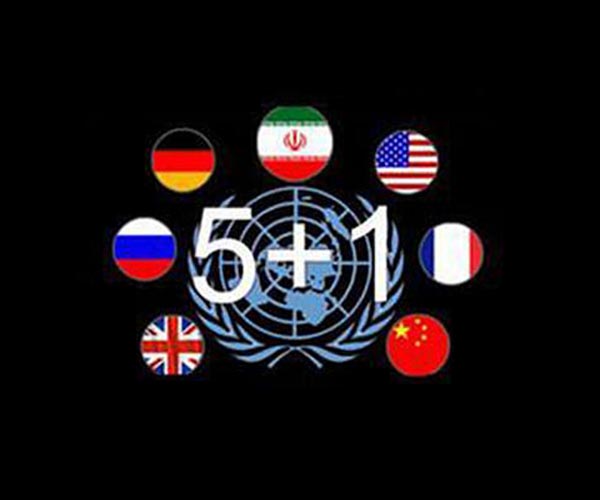
The European Union will preside over talks between current members of the 2015 pact — Iran, China, France, Germany, Russia and Britain — set to begin on Tuesday.
The US delegation will meet in a different place with EU negotiators acting as go-betweens.
Kelsey Davenport, director for Non-proliferation Policy at the Arms Control Association think-tank, said the format was not ideal but added the EU was well situated to break the stalemate.
She called for a "bold first step by both sides" which she hoped would inject "much-needed momentum" into the process.
Washington, for example, could unfreeze Iranian funds held in foreign banks to facilitate humanitarian trade, and Tehran could stop enriching uranium beyond the levels agreed in the 2015 accord, said Davenport.
"The problem is all the irreversible things, like the research activities Tehran has undertaken," a Vienna-based diplomat pointed out.
Nor is it clear that the US administration is willing to lift all of its sanctions, as Iran is demanding.
On the eve of the talks, Rob Malley, US special envoy on Iran, talked only of removing "those sanctions that are inconsistent with the deal".
"If we're realistic about what both sides have to do… we could get there," he told US broadcaster PBS.
"But if either side takes a maximalist position and says that the other side has to do everything first before it's going to move one inch, I think it's hard to see how this succeeds."
US ready to look at nuclear sanctions in indirect Iran talks
Washington (AFP) April 5, 2021 –
The United States said Monday it was ready to review key sanctions on Iran if it comes into compliance with a nuclear deal ahead of European-led indirect talks aimed at salvaging the accord.
The State Department confirmed that Rob Malley, the new pointman on Iran named by President Joe Biden's administration, was traveling to Vienna to lead the US delegation but that he did not expect to meet with his Iranian counterpart.
The meetings starting Tuesday aim to break a logjam as Biden supports a return to the 2015 nuclear deal but has insisted that Iran first reverse nuclear steps it took to protest sweeping sanctions imposed by former US president Donald Trump when he walked out of the accord.
"There's no denying that we are approaching this with urgency," State Department spokesman Ned Price told reporters, saying the "breakout time" if Iran decides to pursue a nuclear bomb had diminished under Trump.
Price reiterated that the United States was ready to look at lifting sanctions — but only those related to the nuclear issue.
"We certainly will not entertain unilateral gestures or concessions to induce Iran to a better place," Price said.
"The original formulation is one that still holds today — it's the limited lifting of nuclear sanctions in return for permanent and verifiable limits on Iran's nuclear program," he said, referring to the accord's text.
Upon exiting the agreement, Trump imposed sweeping sanctions including a US ban on any other country buying Iran's oil, a crucial export for the country.
Successive US administrations have imposed other sanctions including on human rights grounds that have also irritated Iranian leaders, but Washington has not put those on the table in nuclear talks.
Britain, China, France, Germany and Russia are also participants in the deal and are eager to see the return of the United States.
Iran said the meeting of the so-called 4+1 countries was to "talk about the path of lifting sanctions."
"Whether the joint commission's agenda produces a result or not depends on the Europeans and the 4+1 reminding the US of its obligations and the Americans acting on their commitments," Iran's foreign ministry spokesman Saeed Khatibzadeh said in Tehran.
"How and where the 4+1 talk to the US is their own business," he told reporters in Tehran.
The European Union has said its mediator will hold "separate contacts" with the United States in Vienna.
According to a senior EU official, two groups of experts from the other countries will work simultaneously, with one focused on US sanctions and the other on reinstating Iran's suspended nuclear commitments.
Khatibzadeh said experts from the Iranian delegation would explain "how (we plan) to stop our remedial measures."
"We have only one step, not step-by-step, (which) includes the lifting of all US sanctions," he stressed.
"It will become clear tomorrow whether the 4+1 can realize the points expected by Iran or not, so that we would have a clearer path forward," Khatibzadeh said.
