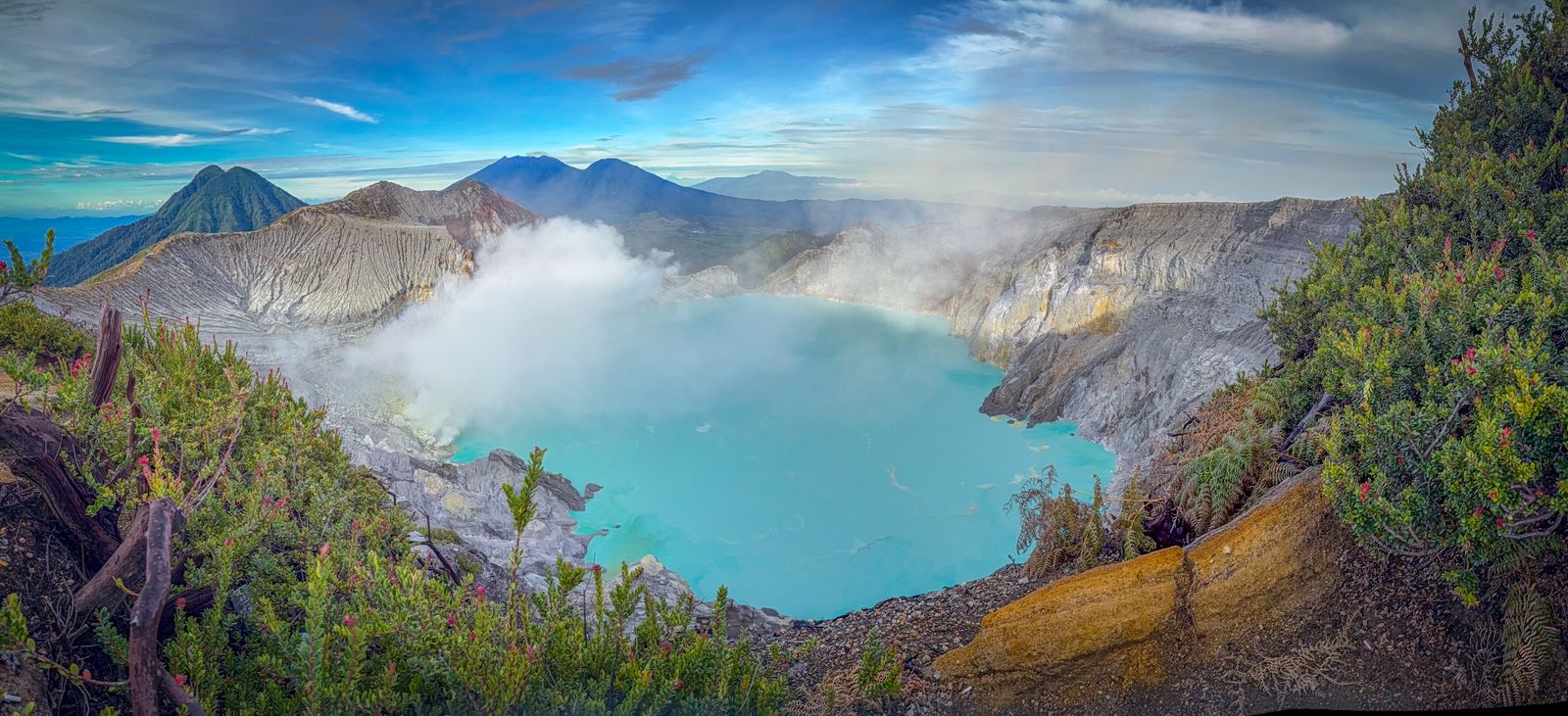
On the night of August 21, 1986, Lake Nyos in northwestern Cameroon released a dense, ground-hugging cloud made overwhelmingly of carbon dioxide. The mechanism was a limnic eruption: volcanic CO₂ had accumulated under pressure in the lake’s deep water, then escaped during a self-amplifying overturn. The disaster killed 1,746 people and about 3,500 livestock within hours, according to the official post-disaster scientific investigation.
It was not a conventional volcanic eruption, and no river of lava or cloud of ash swept through the villages. The lake itself had become a pressure vessel. Scientists established the basic explanation within months, although later measurements were needed to understand how quickly the gas reservoir could rebuild and how it might be controlled safely, as described in a 30-year scientific review of the disaster.
The night the lake exhaled
At around 9 p.m., farmer Ephriam Che heard a rumbling sound from the direction of the lake. He left his house and saw what appeared to be a white mist rising above the water. The detailed Smithsonian account of the disaster records that he soon lost consciousness.
By dawn, Lower Nyos and other settlements beneath the crater were almost silent. People were found beside cooking fires, in doorways and in their beds, often without visible injuries. Some who had remained unconscious for more than a day awoke to discover that nearly everyone around them had died.
The cloud travelled through low valleys and depressions, reaching communities many kilometres from the lake. People and animals on higher ground had a better chance of survival, while those in enclosed or low-lying places were overwhelmed. Thousands of residents were eventually evacuated from the surrounding area.
How the lake became a pressure vessel
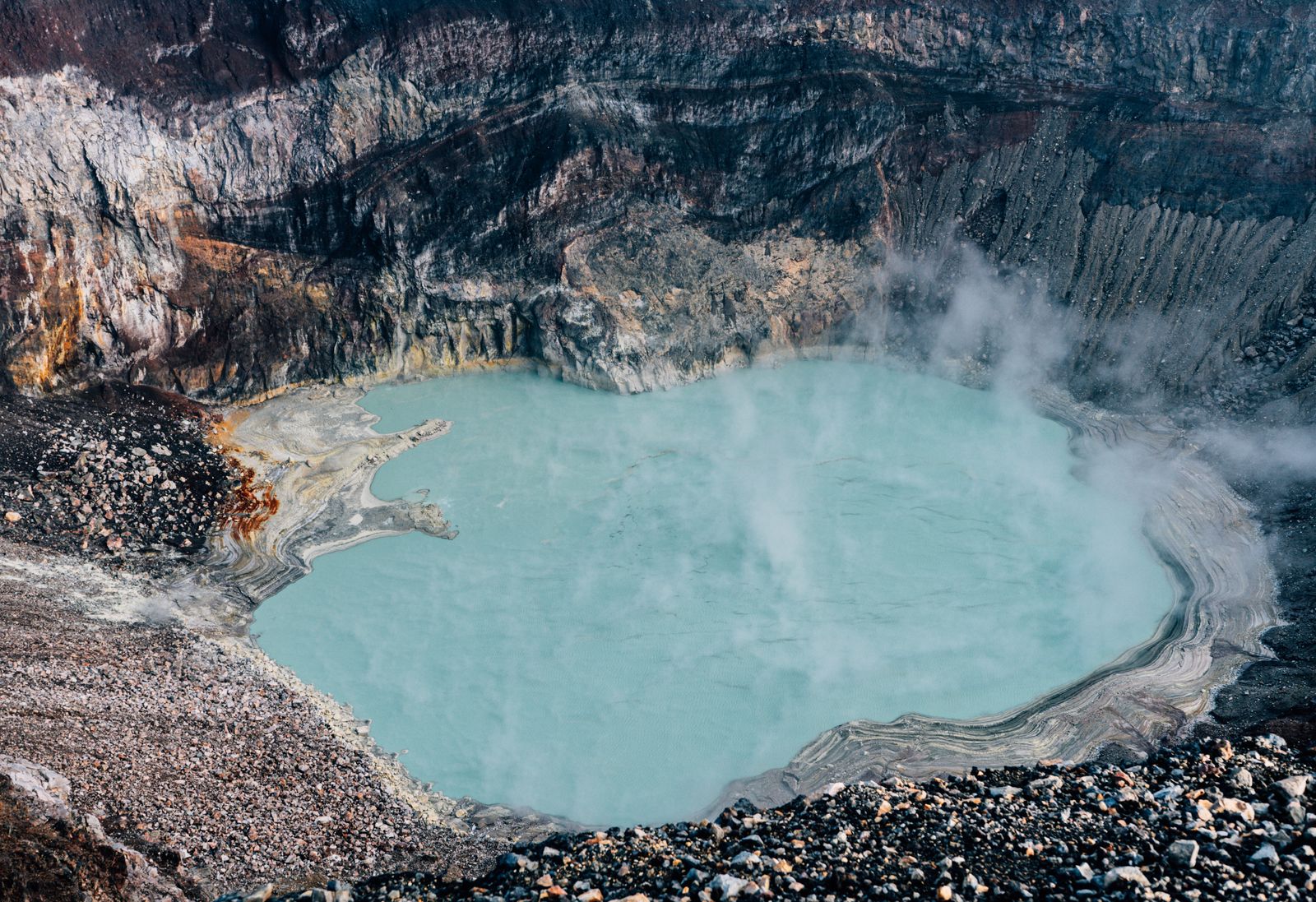
Lake Nyos occupies a volcanic crater and covers only about half a square mile, but it is more than 200 metres deep. A corrected NASA Earth Observatory profile of Lake Nyos describes a deep magma source beneath the region that releases carbon dioxide into groundwater. That groundwater eventually enters the bottom of the lake.
At such depths, the weight of the water creates enough pressure to keep large quantities of CO₂ dissolved. The process resembles carbonating a drink, except that the pressure comes from the lake itself and the gas arrives continuously from below. As long as the deepest water remains undisturbed, the CO₂ can stay trapped.
Nyos lies close to the equator, where surface temperatures do not change enough between seasons to produce the regular full-depth mixing seen in many temperate lakes. Its colder, denser bottom water can therefore remain isolated beneath warmer layers. More gas accumulates year after year without an obvious change at the surface.
By 1986, the deepest water held an enormous dissolved gas load. Bringing a sample towards the surface caused it to fizz as pressure fell, much like opening a bottle of sparkling water. What remained uncertain was what would eventually push enough of that water upwards to begin an uncontrolled release.
What set the eruption running
The initial trigger on August 21 has never been proved. Investigators have considered a small landslide, unusually cool rain or weather-driven movement within the lake. It is also possible that the increasingly gas-rich deep water became unstable without a dramatic external disturbance.
Once a parcel of deep water began rising, the pressure around it fell. CO₂ formed bubbles, making the parcel less dense and causing it to rise faster. That released still more gas, increased the buoyancy again and turned a small movement into a runaway chain reaction.
Water and gas surged towards the surface in a violent fountain. The lake level fell, and iron-rich water from the depths was churned upwards. When the dissolved iron encountered oxygen, the normally blue lake turned reddish brown.
Carbon dioxide is colourless and odourless, and it is denser than ordinary air. In the quantities released at Nyos, it flowed downslope and collected in valleys, displacing breathable air around homes, paths and cattle enclosures. People exposed to the highest concentrations lost consciousness rapidly and died from oxygen deprivation.
How scientists solved the mystery
When investigators arrived, a fresh volcanic eruption seemed like the most obvious explanation. Yet they found no new ash layer, lava, blast deposits or widespread heat damage. The evidence pointed instead towards something that had emerged from the water.
A warning had come two years earlier. On August 15, 1984, Lake Monoun, another Cameroonian crater lake, released gas that killed 37 people near a road. Volcanologist Haraldur Sigurdsson collected deep-water samples and found that a container brought to the surface became strongly pressurised as dissolved CO₂ escaped.
At Nyos, international teams sampled water at different depths and mapped the distribution of dissolved gas. University of Michigan limnologist George Kling, who had visited the lake before the disaster, was among those who returned. The measurements showed that the lower water layers remained heavily charged with carbon dioxide even after the eruption.
The findings explained both disasters and revealed a continuing danger. Nyos had not exhausted the geological source supplying the gas. Unless CO₂ was removed deliberately, the deep water could gradually recharge and recreate the conditions that existed in 1986.
The pipes, the dam and the people left outside
The eventual solution was deliberately simple. Engineers lowered a pipe into the gas-rich bottom water and used a pump to start the flow. As the water rose, the falling pressure released bubbles, making the water column buoyant enough to maintain a self-sustaining fountain without continuous pumping, a system documented in a peer-reviewed assessment of the controlled degassing programme.
The first permanent degassing pipe began operating at Nyos in 2001. Two additional pipes were installed in 2011 to accelerate the removal of carbon dioxide. Lake Monoun received its own pipe in 2003 and was subsequently fitted with further equipment.
A separate hazard lay at the northern edge of Nyos, where the lake was retained by a narrow natural dam of weakened volcanic material. A 2005 UN assessment of the Lake Nyos dam warned that erosion had created a serious risk of collapse. Contemporary UN warnings said failure might occur within five years, potentially sending floodwater towards communities in Cameroon and Nigeria.
Cameroon later reinforced the spillway and weakened section of the dam. Scientific reviews nevertheless describe long-term surveillance as essential because gas continues to enter the lake and the crater’s geology has not stopped changing. The degassing programme reduced the immediate threat rather than permanently removing its source, as explained in a later review of the Cameroonian lake hazards.
The engineering progress did not resolve the disaster’s human aftermath. In 2016, Voice of America reported that survivors still felt abandoned, with compensation disputes unresolved and many people unable to return permanently to their ancestral villages. The report described the former settlement area as strikingly empty of people and animals, but that observation should not be treated as proof that the entire region remains biologically silent today.
The larger lake waiting to the east
The most consequential comparison is Lake Kivu, which lies between Rwanda and the Democratic Republic of the Congo. An Eawag research programme describes enormous quantities of dissolved carbon dioxide and methane held beneath its strongly stratified surface. A USGS assessment of hazards around Lake Kivu estimates that roughly 2.5 million people live near its shores.
Rwanda extracts some of Kivu’s methane to generate electricity, but the scale and complexity are far beyond the pipe system used at Nyos. Engineers must remove gas without destabilising the lake’s layered structure. Nyos also offers an earthly counterpart to Space Travel’s exploration of Titan’s methane-fed weather cycle and its account of John Snow’s search for an invisible killer in 1854.
At Nyos, the geology beneath the crater continues to supply carbon dioxide just as it did before 1986. The difference is that instruments, reinforced structures and controlled fountains now stand between the accumulating gas and the valleys below. Beneath the lake’s blue surface, the process has never stopped; it has only been given a safer route into the air.