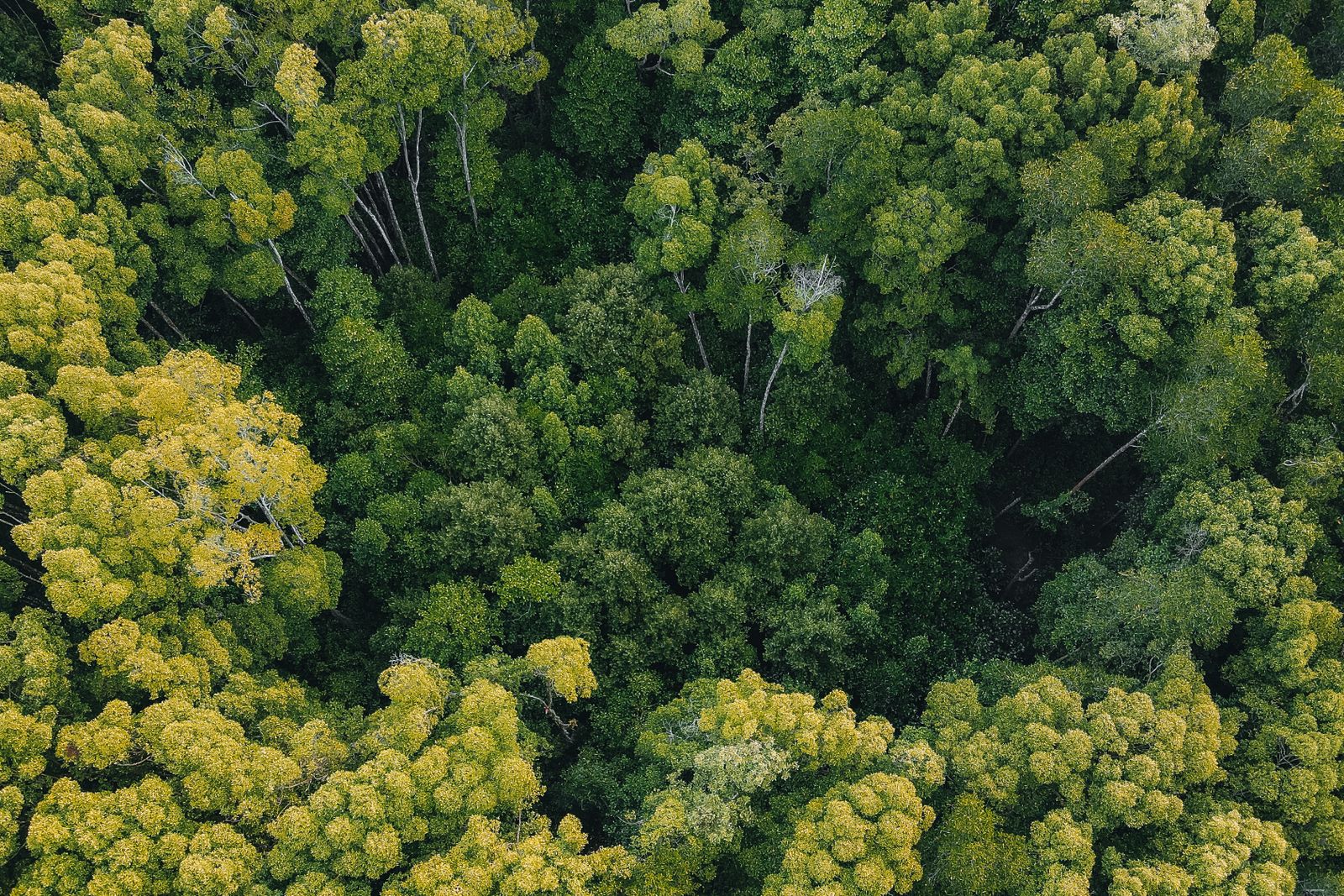
Gabon is the country, and the mechanism is results-based REDD+ finance through the Central African Forest Initiative. In 2021, after independent verification of lower forest-related emissions in 2016 and 2017 against a 2006–2015 reference period, Gabon became the first African country to receive such a national-level payment: $17 million as the first tranche of an agreement worth up to $150 million over ten years.
The tension in the title is economic rather than rhetorical. A peer-reviewed study of a Gabonese forest concession calculated that, depending on timber margins and management choices, carbon would need to fetch roughly $4.4 to $25.9 per tonne of CO2 to compensate a concession holder for timber income forgone by changing logging practices, while Gabon’s first CAFI payment was calculated at $5 per tonne.
The deal, in plain numbers
REDD+ stands for Reducing Emissions from Deforestation and Forest Degradation, with the broader framework also covering conservation, sustainable forest management and enhancement of forest carbon stocks. In Gabon’s case, independent experts verified reductions in forest-related emissions before the first payment was released.
The arrangement is unusual because Gabon already had very low deforestation. When the agreement was announced in 2019, CAFI said it would make Gabon the first African country eligible to be rewarded not only for reducing emissions from deforestation and degradation but also for carbon dioxide removed by its natural forests.
The 2021 tranche was described by CAFI as official development assistance tied to verified past performance, not simply as a conventional private carbon offset purchase. Gabon’s forests cover more than 88 percent of the country, and CAFI estimates that they absorb about 140 million tonnes of CO2 each year.
But keeping a forest standing does not erase the income available from harvesting it. The World Bank’s 2024 Gabon Economic Update estimated that forestry accounted for 3.2 percent of GDP and 6 percent of exports in 2023 while providing almost 15,000 jobs, making it the country’s leading private-sector employer.
Why timber can outbid carbon
Gabon does not face a simple choice between untouched rainforest and clear-cut land. Much of its commercial forest is managed through concessions where operators selectively harvest valuable species, then leave the wider forest standing through a cutting cycle.
The economic problem appears when a concession holder is asked to harvest less intensively, lengthen the interval between cuts or leave more valuable trees untouched. The Gabon concession study found that the break-even carbon price rose as the financial margin on timber rose, meaning a low carbon payment could fail to cover the revenue sacrificed by changing forest management.
Gabon has also spent years trying to capture more of the value of each harvested tree inside the country. Its ban on raw-log exports and expansion of domestic wood processing increased the importance of mills, processed-wood exports, employment and tax revenue, so the alternative to conservation finance is not merely the market price of an unprocessed log.
There is another number that makes the imbalance stranger. The World Bank estimated the value of Gabon’s forest ecosystem services at $75.1 billion in 2020, with about 99 percent attributed to carbon-retention services, but that is an estimated asset value rather than $75.1 billion flowing into Gabon’s treasury.
How Gabon became a high-forest, low-deforestation country
Gabon’s forests have survived partly because the pressure on them has been comparatively light. The World Bank describes the country as having a highly urban, relatively small population and puts its recent deforestation rate at about 0.03 percent per year.
That combination places Gabon in the category known as high forest cover, low deforestation, or HFLD. It creates a problem for conservation finance because a country that never allowed deforestation to become extreme has fewer dramatic reductions to sell than one that first loses forest rapidly and then slows the destruction.
That is why the 2019 CAFI agreement mattered beyond the first cheque. It was designed to recognize both reductions in emissions and removals by forests, giving an already forest-rich country a route toward being rewarded for maintaining performance rather than only for repairing earlier damage.
None of this requires Gabon to stop using timber altogether. The verified reductions behind the first CAFI payment came largely from lower degradation associated with forestry activities, which makes the central contest one of intensity and management: how much wood can be harvested while preserving more carbon than under the previous baseline?
The same arithmetic appears in Georgia and Washington
The scale changes completely in the United States, but the opportunity-cost problem is recognizable. In Georgia, forest owners have been weighing carbon income while housing and solar developers compete for their land, particularly as weakness in traditional timber markets puts pressure on working forests.
A Georgia landowner deciding between timber, development and carbon credits is not participating in the same system as the government of Gabon. The common element is simply that keeping carbon in trees has to compete with another use of the same land that already has a market price.
Washington State has tested the same proposition on public land. The Department of Natural Resources described a 10,000-acre forest carbon project intended to generate carbon-credit revenue for schools, colleges and local services while taking some stands out of planned timber harvests.
That project also exposes the trade-off directly: carbon revenue has to satisfy trust beneficiaries while reduced timber supply can affect mills and rural communities. The question is therefore not whether a standing tree has value, but whether enough of that value can be turned into dependable cash for the people and institutions that otherwise earn money when it is cut.
Why forest-carbon critics keep pushing back
Putting a price on forest carbon does not automatically make every carbon credit sound. A 2025 study in Science examined 52 voluntary REDD+ projects across 12 tropical countries and found that 19 percent met their reported emissions targets, although many underperforming projects still produced partial climate benefits.
The recurring technical problems include baselines that overstate what would have happened without a project, leakage when forest loss shifts somewhere else, and permanence when stored carbon is later lost. Those problems can result in credits representing less additional climate benefit than their headline numbers imply.
Gabon’s CAFI payment should not be treated as identical to those project-level voluntary offsets. It was a national results-based payment made after independent verification against a historical emissions reference level, and CAFI explicitly tied the $17 million tranche to reductions recorded in 2016 and 2017.
That does not solve the financial problem identified by the concession research. Verification can establish that emissions fell, but it cannot by itself guarantee that future payments will always outweigh the value of timber, agriculture, mining or other competing uses of forest land.
What happens after the first $17 million
CAFI’s current account of the partnership still identifies the 2021 transfer as Gabon’s first $17 million results-based payment. The partnership has continued beyond Gabon’s 2023 political transition, including a 2025 agreement to develop payments for environmental services, but the public record does not justify assuming a particular “next tranche” or payment date.
A much larger experiment is now taking shape internationally. The Tropical Forest Forever Facility was formally launched at COP30 in 2025 and ended the conference with more than $6.7 billion in announced contributions, as part of a model intended to create continuing payments for tropical countries that conserve forests.
Space Travel has looked at the carbon arithmetic from other angles, including why a shallow waterlogged peatland can store extraordinary amounts of carbon and how pastoralism and recovering wildlife can occupy the same East African landscape. Gabon’s version comes down to an equally physical question: whether money attached to invisible tonnes of carbon can compete with wood that can be sawn, loaded and sold.
The first $17 million arrived in 2021, while the forest remained over Libreville’s horizon and timber continued moving through Gabonese mills. The unresolved number is what standing forest will earn over the decades ahead, because that is the figure that eventually has to meet the price attached to a tree once a saw reaches it.